Home |
Games |
About |
News |
Forum |
|
|||||||
The Realm of Hy Brasil |
|||||||
The Races of Hy Brasil

The Orc Horde
The Orc Horde Theme
 |
 |
|
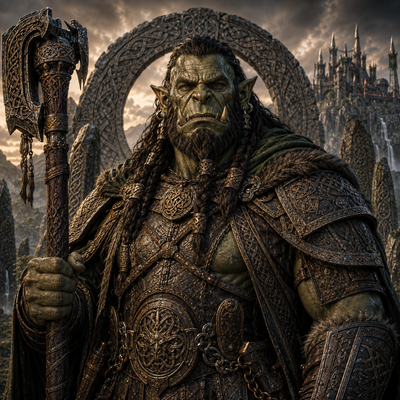
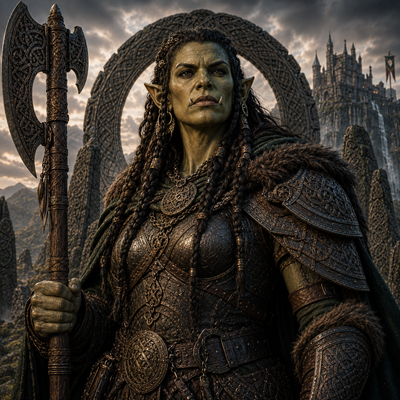
The Orc Horde of Hy BrasilThe Orc Horde is one of the most feared powers in Hy Brasil. They are a race of strength, fury, endurance, blood-oaths, war drums, clan banners, brutal honour, and overwhelming battlefield momentum. Where humans adapt, elves strike with precision, and dwarves endure behind stone, the orcs conquer through force of will. They are not mindless beasts. That is the mistake many kingdoms make before their walls fall. Orcs have their own laws, chiefs, war councils, shamans, grudges, sacred challenges, bloodlines, and codes of loyalty. They respect strength above words, courage above birth, and victory above polished manners. An orc lord does not inherit obedience forever simply by blood. He or she must prove they are strong enough to lead. Among the orcs, power is earned in battle, defended by reputation, and tested constantly. To outsiders, the Orc Horde may appear savage. To the orcs themselves, the other races often appear soft, treacherous, overcomplicated, and weak. Humans hide behind treaties. Elves hide behind trees. Dwarves hide behind walls. Goblins hide behind lies. Orcs prefer a simpler truth: Stand. Fight. Win. Be worthy. The War ClansOrc society is divided into war clans, blood tribes, fortress camps, hunting bands, raider hosts, and oath-bound warrior families. Each clan has its own colours, scars, chants, war drums, and ancestral victories. Some clans are nomadic, moving across the wild lands with herds, wagons, and marching warbands. Others build grim fortresses of timber, stone, bone, and iron. Some live in mountains, forests, marshlands, or ruined lands abandoned by older kingdoms. Others seize castles from weaker rulers and turn them into roaring warholds. An orc lord or lady is expected to lead from the front. A commander who hides behind the line will not be respected for long. Orc soldiers want to see their leader’s banner in the charge, hear their voice over the drums, and know that the one giving orders is willing to bleed. This makes orc leadership dangerous but powerful. A great orc lord can unite scattered clans into a terrifying horde. A weak one may be challenged, abandoned, or killed. Place in the Earth RealmThe race of gods who rule the Earth Realm watch the orcs with caution. Orcs are powerful servants when guided by honour or sacred purpose, but they can become devastating if corrupted by hatred, pride, or dark worship. Many orcs are drawn to Cernunnos, the horned god of the wild, beasts, strength, survival, and primal nature. His teachings of endurance, instinct, and the harsh law of the living world speak strongly to orc warriors. Some orc clans honour the Mother Goddess, especially those who value fertility, clan survival, strong families, and protection of their people. These clans may be fierce in defence but less likely to wage pointless wars of destruction. Belenus may be honoured by rare but noble orc warrior orders who believe strength must serve justice and protection rather than cruelty. Brigid may be respected by orc smiths, healers, fire-keepers, and war chanters who see sacred craft and battle songs as sources of power. Gaia may be followed by wild orc clans who live close to the land and understand that overhunting, burning, and waste weaken future generations. Etain is less commonly followed, but some orc nobles may honour her as a goddess of loyalty, passion, beauty in strength, and the glory of clan song. The danger is that orcs can also be drawn toward Moloch. Moloch promises strength without restraint, victory without mercy, and power through terror. Some orc clans fall into his furnace cults, becoming brutal raiders, slavers, burners, and butchers. These corrupted orcs are feared even by other orcs. Yaldabaoth has less natural appeal to free orc clans, for orcs hate being chained by cold law and imperial obedience. However, defeated or ambitious orc lords may sometimes serve him in exchange for weapons, rank, and conquest. Orc HonourOrc honour is not the same as human chivalry or elven elegance. It is harsher, simpler, and more physical. Orc honour is proven through courage, loyalty, endurance, and victory. An orc may respect an enemy who fights bravely. An orc may despise an enemy who begs, betrays, or hides behind others. Orcs do use strategy, but they dislike cowardly deceit. Ambush can be honourable if it is part of war. Poisoning wells, murdering children, breaking guest-right, or betraying a sworn oath may be seen as shameful by many clans — though darker clans may ignore such customs. Strength matters, but so does loyalty. A warrior who abandons the horde in battle may be remembered with disgust. A warrior who dies holding the line may be sung of for generations. Orc law is often spoken around fires, not written in books. Their histories live in chants, scars, trophies, drums, and the memories of shamans. Orc StrengthsThe orcs are among the strongest melee fighters in Hy Brasil. Their warriors are physically powerful, intimidating, and dangerous in direct combat. They are especially effective when charging, overwhelming weaker lines, and forcing enemies into panic. Orcs are not delicate troops. They can absorb punishment, keep fighting while wounded, and press attacks that would break less aggressive armies. When their morale is high, an orc force can seem unstoppable. Their greatest strength is shock power. An orc charge can break poorly prepared troops before a proper battle even begins. If supported by drums, banners, a strong lord, and enough numbers, orcs can smash through the centre of an enemy army. They also do well in rough terrain, wild lands, and brutal frontier warfare. Orcs are hardy, used to hardship, and less dependent on comfort than humans or elves. Orc WeaknessesThe orcs are powerful, but not subtle. They are weaker at diplomacy, delicate manoeuvres, long-term administration, and patient siege planning unless supported by clever leaders or allied races. They may also struggle with internal clan rivalries if the player’s authority is weak. Orc armies can be vulnerable to disciplined defence. A dwarf shield wall in a mountain pass, an elven ambush in a forest, or a human army using spears and flanking tactics can punish reckless orc charges. Their aggressive nature can also be a weakness. Orc commanders may be tempted into bad attacks. If the enemy can bait the horde into unfavourable terrain, split its forces, or survive the first charge, the orcs may lose momentum. Orc realms may also struggle with stability if they go too long without war, victory, land, tribute, or visible strength. A peaceful orc kingdom is possible, but it needs strong leadership and a clear purpose. Preferred Battle StyleThe orcs prefer horde assault, shock warfare, and brutal direct attack. Unlike humans, who prefer combined-arms manoeuvre, elves who prefer ambush and flanking, or dwarves who prefer hold-and-counter defence, orcs are at their strongest when they are moving forward with force. Their ideal battle plan is: Gather strength, beat the drums, charge hard, break the enemy centre, then roll through the battlefield before the foe can recover. Orc armies want to create panic. Once an enemy line wavers, orcs become even more dangerous. Their warriors thrive on momentum. If the first attack breaks through, the battle may turn into a rout very quickly. A good orc lord understands when to unleash the horde. A foolish orc lord charges every enemy the same way. The best orc commanders use their reputation for brute force as a weapon. The enemy expects a charge — so the orc lord may feint, hold back reserves, or send faster troops around the side before the main horde hits. Still, the heart of orc warfare remains simple: Break them. Horde Attack or Flanking Manoeuvre?Orcs are best at horde attacks. They can flank, especially with lighter warbands, wolf-riders, scouts, or allied goblin troops, but flanking is not their core racial identity. Their main strength should be overwhelming power. Their strongest tactic should be: Massed shock assault. Orc forces excel at: Direct charges. Breaking weak morale. Overrunning light infantry. Intimidating enemies before battle. Fighting in brutal melee. Holding momentum after a breakthrough. Winning through fear and force. Punishing enemies who lack strong defence. However, orcs should suffer if they charge blindly into prepared defenders. Dwarves, spearmen, fortified humans, and elven traps can all turn orc strength against them. The best orc strategy is not mindless horde attack. It is controlled horde attack. Game AbilitiesIn gameplay terms, orcs should be the strongest aggressive melee race. They should reward bold players who like war, raids, intimidation, and direct battlefield pressure. Suggested orc racial traits: Brutal Charge Horde Momentum Fearsome Presence Strong Melee Fighters Hardy Warriors War Drum Morale Rough Land Endurance Internal Challenge Risk Lower Diplomatic Trust Moloch Corruption Risk Suggested Orc Stat IdentityFor the website, orcs can be described in simple gameplay language as: Attack: Very High in melee Orcs are ideal for players who want to fight hard, expand through strength, and dominate the battlefield through fear and momentum. Orc Lords and LadiesOrc Lords and Ladies are expected to prove themselves constantly. They are war leaders, clan chiefs, champions, judges, and symbols of strength. An orc ruler who cannot command respect may quickly face rivals. Female orc lords are just as feared as male lords. Among many clans, strength, courage, and victory matter more than sex. A female orc warlord who has broken enemies, defended the clan, and survived challenges may command absolute loyalty. Orc rulers must balance brutality with wisdom. A lord who is too soft may be challenged. A lord who is too reckless may get the clan destroyed. The greatest orc leaders know when to roar, when to wait, when to strike, and when to spare a defeated enemy in order to make them useful. A respected orc lord is not merely the strongest warrior. They are the one who brings victory. Relationship with HumansOrcs often see humans as ambitious, fragile, and clever. Humans lack orc strength, but they compensate with castles, diplomacy, trade, and flexible armies. Human-orc relations vary widely. Some human clans fear orcs as raiders and invaders. Others hire orc mercenaries, make military alliances, or use orc shock troops to strengthen their armies. Orcs may respect human courage when it is proven in battle. A human lord who stands firm against an orc charge may earn grudging admiration. A human lord who relies too much on tricks and treaties may be mocked. A human-orc alliance can be powerful: humans provide organisation, food, diplomacy, and castles; orcs provide battlefield force. But trust is fragile. Relationship with ElvesOrcs and elves are natural opposites in war. Elves are patient, precise, quiet, and graceful. Orcs are direct, loud, forceful, and brutal. Elves prefer ambush and flanking. Orcs prefer impact and momentum. Elves defend forests with silent arrows. Orcs want to drag the enemy into open battle and crush them. This makes elf-orc conflict dramatic and dangerous. If orcs catch elves in the open, the elves may be overwhelmed. If elves lure orcs into forests and traps, the orcs may bleed badly before they ever reach the enemy. Some orc clans respect Cernunnos-aligned elves as fellow children of the wild, though they may still call them arrogant and delicate. Relationship with DwarvesOrcs respect dwarf toughness, even when they hate fighting them. Dwarves are among the few races who can stand firm against an orc charge. Their shield walls, armour, and strongholds frustrate orc commanders. Orcs may call dwarves stubborn cowards hiding behind stone, but deep down they know dwarves are hard enemies. Dwarves often see orcs as reckless destroyers who mistake rage for strategy. Orcs see dwarves as slow, over-armoured, and too fond of walls. On the battlefield, this is one of the classic clashes of Hy Brasil: Orc momentum against dwarven endurance. If the orcs break the line, they win. If the dwarves hold, the orcs may shatter themselves against the stone. Relationship with GoblinsOrcs and goblins often work together, but not always peacefully. Goblins are smaller, quicker, sneakier, and more devious. Orcs may look down on them as weak tricksters. Goblins may see orcs as loud brutes who are easy to manipulate. Yet combined orc-goblin armies can be extremely dangerous. Goblins can scout, sabotage, raid, poison supplies, open gates, and harass flanks while the orcs prepare the main assault. Orcs bring the hammer. Goblins bring the knife. A wise orc lord uses goblins carefully. A foolish orc lord trusts them too much. Religion Among the OrcsCernunnos is one of the most natural gods for orc clans who value strength, survival, beasts, wild lands, and the sacred law of nature. The Mother Goddess may be honoured by clans who value fertility, family, protection, and the survival of the tribe. Belenus may attract honourable warrior clans who believe strength must be used against true evil. Brigid may be honoured by orc smiths, healers, and war-chanters. Gaia may be followed by orc clans who live close to the land and avoid wasteful destruction. Etain may be rare among orcs, but not impossible; some orc noble houses may honour her through clan loyalty, war songs, passion, and beauty in strength. Moloch is the great danger for orcs. His cults appeal to rage, revenge, cruelty, and endless war. Orcs who fall to Moloch may become terrifying, but they also lose honour and become slaves to hatred. Yaldabaoth may recruit orcs into imperial armies, but most free orcs dislike his obsession with obedience, law, and control. Orc Strategy in the GamePlayers using orcs should think aggressively, but not foolishly. Orcs are strongest when they choose the moment of impact carefully. They should avoid being baited into traps, forests, narrow passes, or fortified dwarf positions without preparation. A strong orc strategy might include: Build large melee armies. Keep morale high through victories and strong leaders. Use intimidation against weaker neighbours. Raid to weaken enemies before full invasion. Use goblin allies or scouts to find weaknesses. Avoid charging prepared defences without support. Attack quickly before enemies build too many fortifications. Use terrain that allows the horde to hit with full force. Keep rival warlords loyal through victory, spoils, and strength. Avoid falling into Moloch worship unless choosing a dark playstyle. The orc player should feel powerful and dangerous, but also under pressure to maintain strength. A peaceful or passive orc realm may become unstable unless the player finds other ways to prove leadership. Final Lore SummaryThe Orc Horde of Hy Brasil is the race of strength, war drums, clan honour, direct power, and battlefield momentum. Orcs are not mindless monsters. They are a proud, brutal, passionate people who respect courage, loyalty, victory, and strength. They are strongest in melee combat, shock warfare, horde assaults, raids, and intimidation. Their preferred tactic is the horde attack, especially when led by a powerful Lord or Lady and supported by clan drums and banners. Their greatest strengths are attack power, morale under strong leadership, physical endurance, and the ability to break enemy lines. Their greatest weaknesses are subtle diplomacy, delicate manoeuvre, reckless charges, internal rivalry, and vulnerability to disciplined defenders. An orc kingdom can become an honourable warrior realm, a wild Cernunnos-blessed clan empire, a brutal war machine, or a dark furnace host of Moloch. The choice belongs to the player. Their teaching is simple: Strength must be proven. Fear must be mastered. The weak line must break. And the horde must never kneel.
|
||