

Home |
Games |
About |
News |
Forum |
|
|||||||||||||||||||||||
The Realm of Hy Brasil |
|||||||||||||||||||||||
The Lords Classes of Hy Brasil |
|||||||||||||||||||||||
The Lords Classes Theme
 |
 |
 |
|
Choose Your Warband Leaders With The Wisdom of the Gods |
|
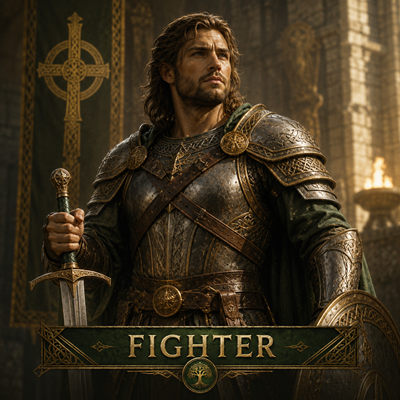 |
FighterThe Fighter is the classic battlefield Lord. Fighters are trained for war, command, discipline and personal combat. They are the natural leaders of armies and are often the safest choice for players who want to expand through military strength. A Fighter is useful for:
Fighters are the backbone of any warlike realm. They may not have the magic of a Mage, the visions of a Priest, or the stealth of a Thief, but when armies clash, the Fighter is the Lord most soldiers want standing beside them. A realm with strong Fighters can become feared early. A realm without any competent Fighters may struggle when war reaches its borders. |
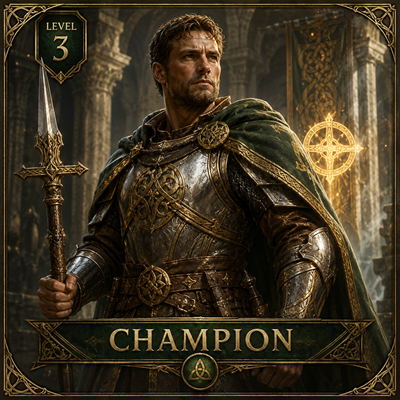 |
Fighter → ChampionA Champion is a Fighter who has proven themselves in war. Champions are elite battlefield leaders. They inspire troops, strengthen armies and stand as symbols of courage and martial power. A Champion is not merely a soldier; they are a hero of the realm. Champions may provide:
Champions are ideal for leading major armies or defending valuable castles. When a Champion enters battle, soldiers believe victory is possible. A Champion can become the military heart of a kingdom. |
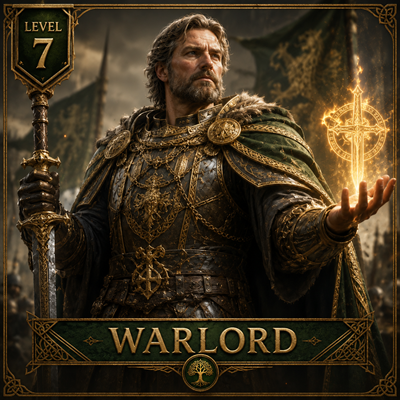 |
Champion → WarlordA Warlord is a Champion who has become a master of war. Warlords are supreme military leaders. They command respect through victory, discipline and fear. A Warlord can lead great armies, organise campaigns and inspire troops across entire regions. Warlords may provide:
A Warlord is the kind of Lord who can found a kingdom through conquest. When a Warlord marches, neighbours take notice. In the late game, a Warlord may become essential for defending a King, breaking enemy coalitions or leading the final war against a High King. |
|
|
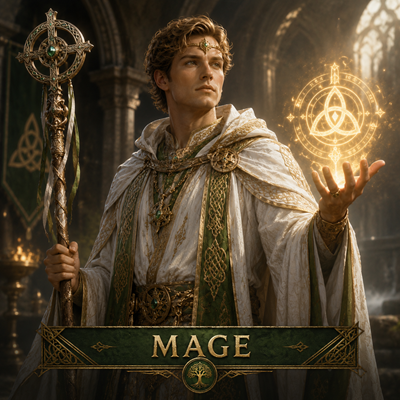 |
MageThe Mage is a wielder of hidden forces. Mages are not simply scholars. They are battlefield manipulators, ritual workers, storm-callers, ward-makers and seekers of ancient powers. A Mage may not command as many warriors as a Fighter, but magic can turn a battle before the first spear is thrown. A Mage is useful for:
Mages bring uncertainty to war. A numerically weaker army supported by a skilled Mage may survive, and a powerful enemy army may be weakened by fear, storms, curses or magical confusion. Mages suit players who enjoy strategy, preparation and battlefield surprises. |
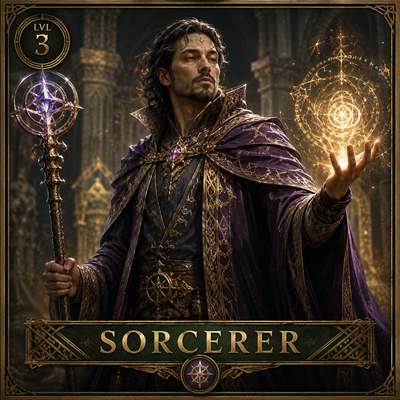 |
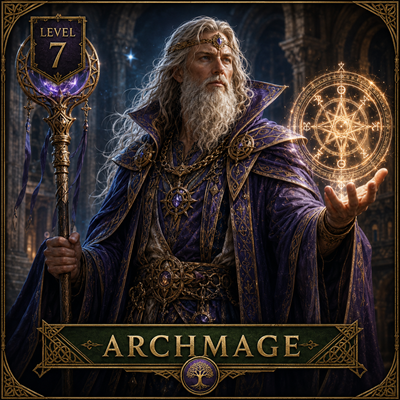
Sorcerer → ArchmageAn Archmage is a Sorcerer who has mastered the highest mysteries of magic. Archmages are rare and terrifying. They are not simply battlefield spellcasters; they are living fonts of ancient power. An Archmage may influence battles, protect realms, empower rituals and challenge enemy magic at the highest level. Archmages may provide:
An Archmage should feel like a major strategic asset. A player who has an Archmage may use them as a weapon, shield, advisor or sacred terror. Enemy rulers may plan entire campaigns around avoiding or destroying them. In a final war, an Archmage could become one of the most important Lords on the map. |
 |
Sorcerer → ArchmageAn Archmage is a Sorcerer who has mastered the highest mysteries of magic. Archmages are rare and terrifying. They are not simply battlefield spellcasters; they are living fonts of ancient power. An Archmage may influence battles, protect realms, empower rituals and challenge enemy magic at the highest level. Archmages may provide:
An Archmage should feel like a major strategic asset. A player who has an Archmage may use them as a weapon, shield, advisor or sacred terror. Enemy rulers may plan entire campaigns around avoiding or destroying them. In a final war, an Archmage could become one of the most important Lords on the map. |
|
|
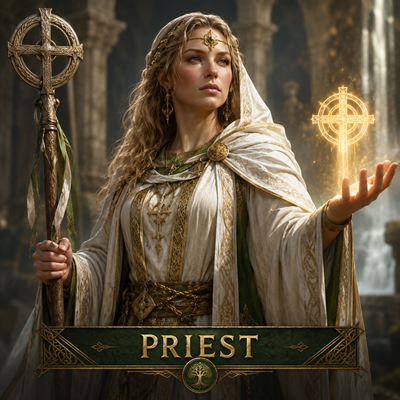 |
PriestThe Priest is the servant of the divine. Priests represent faith, worship, blessing and sacred authority. They serve the gods of Hy Brasil and help connect the player’s realm to divine favour. A Priest may bless armies, strengthen temples, support religious elections, protect castles and guide the spiritual direction of a realm. A Priest is useful for:
Priests are especially important because religion is part of Hy Brasil’s political world. A player’s chosen god may shape alliances, rivalries, holy wars and spiritual ambitions. A strong Priest can make a realm feel sacred, protected and chosen by the gods. |
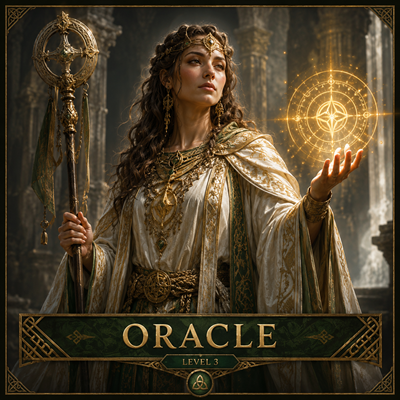 |
Priest → OracleA Oracle is a Priest who has become a divine seer. The title High Priest is reserved for the elected religious leader of a god’s followers, so the normal Priest promotion becomes Oracle. This keeps religious politics clear while still giving Priest Lords a powerful class path. Oracles are sacred visionaries. They hear whispers from the gods, interpret omens, bless armies and sense danger before it appears. Oracles may provide:
An Oracle may help a realm survive disaster. They may see war coming, strengthen the faithful, protect sacred places and guide kings toward divine favour. Oracles are powerful in realms that take religion seriously. |
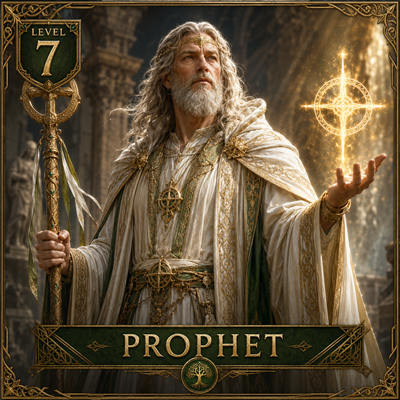 |
Oracle → ProphetA Prophet is an Oracle who has become a true voice of the divine. Prophets are among the most spiritually powerful Lords in Hy Brasil. They do not merely serve the gods; they speak with authority that can move armies, kings and entire faiths. Prophets may provide:
A Prophet may become the spiritual centre of a kingdom. They can strengthen armies through faith, guide rulers through visions, protect the faithful from disaster and make a god’s presence feel real in the campaign world. A Prophet is not automatically the elected High Priest, but they may become a very strong candidate for that role. |
|
|
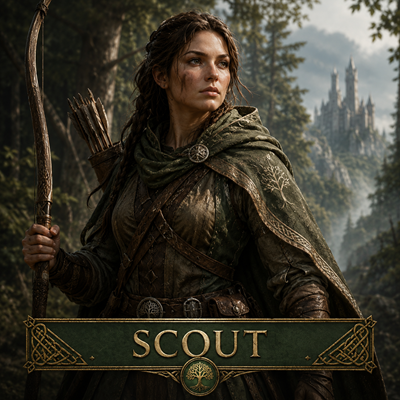 |
ScoutThe Scout is the eyes and ears of the realm. Scouts are fast, observant and skilled at moving through difficult terrain. They help reveal the world, detect threats, guide armies, find paths, watch enemy movement and reduce the danger of marching blindly into unknown lands. A Scout is useful for:
In a game of hidden information, Scouts are extremely valuable. A ruler who sees danger before it arrives can prepare. A ruler without Scouts may only discover an invasion when enemy banners are already at the gate. Scouts suit cautious players, explorers, raiders and military planners. |
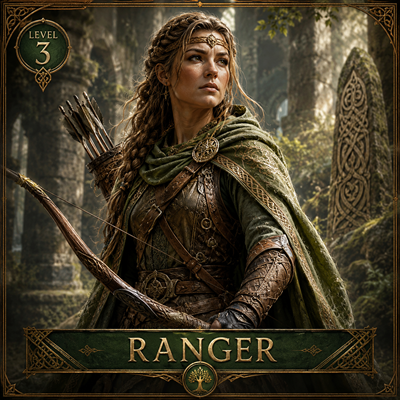 |
Scout → RangerA Ranger is a Scout who has mastered wilderness, movement and survival. Rangers know the hidden paths of forest, hill, marsh and ruin. They are hunters, guides, watchers and border guardians. A Ranger can make an army move more safely and help a ruler understand the map better than their enemies. Rangers may provide:
Rangers are vital for frontier realms, forest kingdoms, raiders and players who need information before committing armies. A Ranger may win a war before it begins by finding the enemy first. |
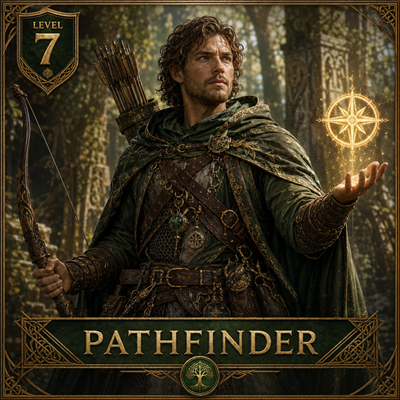 |
Ranger → PathfinderA Pathfinder is a Ranger who has become a master of unknown roads, hidden passes and secret ways. Pathfinders are legendary scouts. They can guide armies through lands others fear to enter. They may reveal hidden routes, locate enemy movement, discover resources and help realms expand into dangerous regions. Pathfinders may provide:
A Pathfinder is especially valuable on large maps, island campaigns, frontier wars and naval-coastal exploration. In a world where fog of war matters, a Pathfinder is priceless. They allow a ruler to know what others do not. A Pathfinder may discover the road to victory before anyone else sees it. |
|
|
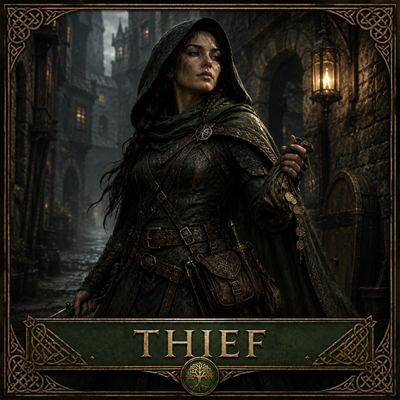 |
ThiefThe Thief is the shadow hand of the realm. Thieves specialise in stealth, deception, infiltration, stealing, sabotage and covert work. They may not be as strong in open battle as Fighters, but they can become dangerous in ways that are harder to predict. A Thief is useful for:
Thieves allow a player to fight without always declaring open war. A clever Thief can weaken a castle, steal supplies, expose secrets or help prepare a more dangerous strike. Thieves suit players who enjoy cunning, risk and misdirection. |
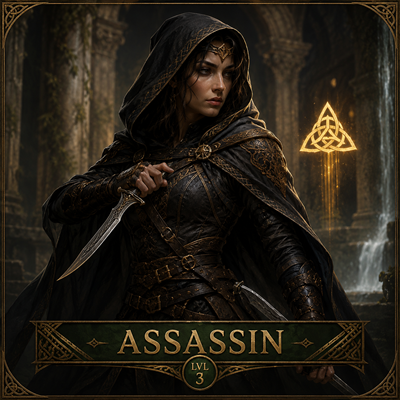 |
Thief → AssassinAn Assassin is a Thief who has become a master of deadly covert action. Assassins are dangerous, feared and politically powerful. They do not fight wars like ordinary Lords. They strike at leaders, supplies, plans and morale. Assassins may provide:
Assassins should be powerful but risky. Their actions may fail, expose them, or create diplomatic consequences. An Assassin can change the direction of a campaign by removing a key Lord at the right moment. |
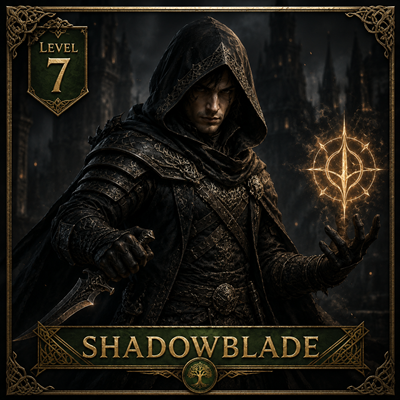 |
Assassin → ShadowbladeA Shadowblade is an Assassin who has become a master of death, secrecy and fear. Shadowblades are the most dangerous covert Lords in Hy Brasil. They operate in silence and strike where armies cannot. A Shadowblade may threaten rulers, disrupt castles, sabotage war efforts and create fear behind enemy lines. Shadowblades may provide:
A Shadowblade should never be common. They are late-game threats whose presence alone can change behaviour. Enemy kings may hide their best Lords, guard their temples, strengthen their castles and hunt for spies if they suspect a Shadowblade is nearby. A Shadowblade does not need to command a great army to change history. |
How Lords Gain ExperienceLords may gain experience through important actions in the campaign. Possible sources of experience include:
The exact experience system can be balanced during development, but the aim is clear: Lords grow through meaningful participation in the world. A Lord who sits idle should not advance as quickly as one who leads armies, explores dangerous lands, serves the gods or risks covert action. Why Promotions MatterPromotions give players long-term attachment to their Lords. A starting Fighter may become a Champion, then one day a famous Warlord. A humble Priest may become an Oracle, then a Prophet whose visions guide kingdoms. A Scout may become a Pathfinder who discovers new lands, while a Thief may become a Shadowblade feared by kings. This creates personal stories inside the wider campaign. Players may remember:
The promotion system turns Lords into legends. Class Balance and Realm StrategyNo class should make the others useless. Each class has a role: Fighters dominate command and open battle. Mages shape battles through magic. Priests strengthen faith, morale and divine power. Scouts control information and movement. Thieves disrupt enemies through stealth and covert action. A wise ruler will often want a balanced court of Lords. A realm with only Fighters may be strong in war but vulnerable to magic, spies and poor information. A realm with only Priests may have divine strength but lack military command. A realm with Scouts and Thieves may know everything but struggle in direct battle. A realm with Mages may be terrifying in key battles but may need protection. The best kingdoms will probably combine several Lord types. Example Starting Realm StrategiesThe War RealmA player begins with several Fighters and aims to produce Champions and Warlords. This realm seeks power through conquest, strong armies and castle capture. The Sacred RealmA player begins with Priests and Mages, building temples and seeking divine favour. This realm may aim to dominate religious politics and produce Oracles, Prophets and possibly a High Priest. The Hidden RealmA player begins with Scouts and Thieves. This realm values information, stealth, ambushes, sabotage and carefully chosen wars. The Balanced RealmA player begins with one Fighter, one Mage, one Priest and one Scout or Thief. This realm has no extreme weakness and can adapt to changing events. Final Class Progression Summary Fighter A battlefield commander and warrior Lord. The Legend of Your LordsThe Lords of Hy Brasil is a game of realms, armies, gods and kingdoms — but it is also a game of characters. Your Lords may rise, fail, betray, conquer, vanish, be captured, become famous, or die in the service of your realm. Some may become Warlords and lead armies beneath royal banners. Some may become Prophets and speak for the gods. Some may become Shadowblades and haunt the dreams of kings. Some may become Archmages whose power changes the fate of battles. Some may become Pathfinders who open the world to conquest and discovery. In Hy Brasil, a Lord is not just a unit. A Lord is a story waiting to be written.
|
|