Home |
Games |
About |
News |
Forum |
|
|||||||
The Realm of Hy Brasil |
|||||||
The Races of Hy Brasil |
|||||||

The Human Clans
The Human Clan Theme
 |
 |
|
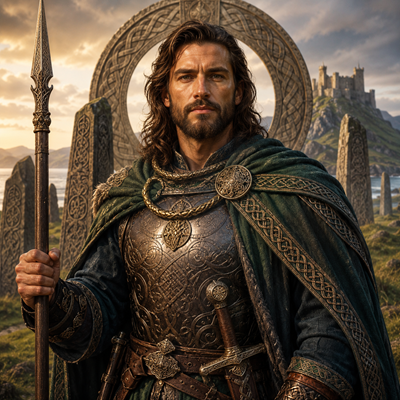
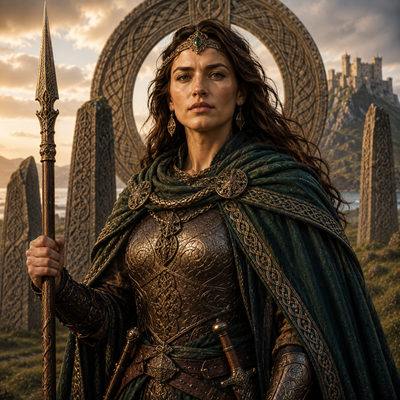
The Human Clans of Hy BrasilThe Human Clans are among the most ambitious, adaptable, and politically dangerous peoples of Hy Brasil. They do not possess the ancient grace of the elves, the deep craftsmanship of the dwarves, the brute strength of the orcs, or the sly survival instincts of the goblins. Yet humans have one gift that has shaped the history of the Earth Realm again and again: They adapt. Humans learn quickly. They organise. They form kingdoms, betray kingdoms, build alliances, break alliances, raise armies, found temples, exploit trade routes, and turn small settlements into powerful realms within a few generations. They are the race of opportunity. Among the clans of Hy Brasil, humans are divided into noble houses, warrior clans, farming communities, coastal kingdoms, hill tribes, merchant families, priestly lineages, and ambitious warlords. Some live in strong castles beside fertile valleys. Others rule from windswept hill forts, island keeps, river towns, sacred groves, or trading ports. To outsiders, the Human Clans can appear divided and unpredictable. One human lord may be a pious servant of the Mother Goddess. Another may be a proud warrior of Belenus. Another may secretly bargain with Yaldabaoth for imperial order. Another may use goblin spies, orc mercenaries, and dark elf assassins while speaking noble words in public. This is the strength and danger of mankind. Humans can become heroes, saints, tyrants, traitors, kings, rebels, conquerors, merchants, prophets, and oath-breakers — sometimes within the same bloodline. Place in the Earth RealmThe race of gods who rule the Earth Realm watch humanity with special interest. Humans are not the oldest race, nor the strongest, nor the wisest, but they are perhaps the most spiritually flexible. They are deeply shaped by the gods they choose to follow. A human kingdom devoted to the Mother Goddess may become fertile, merciful, and beloved by its people. A human realm devoted to Cernunnos may become wild, hardy, and difficult to conquer. A kingdom of Belenus may become honourable, disciplined, and fierce against evil. A court that honours Etain may become cultured, diplomatic, and rich in music, beauty, and alliances. A land that follows Gaia may learn restraint and long-term balance. A Brigid realm may become wise, well-crafted, learned, and strong in healing and smithing. But humanity is also vulnerable to darkness. Yaldabaoth finds humans useful because they love law, hierarchy, crowns, records, taxes, armies, and empire. He whispers to ambitious rulers that the world would be safer under one throne. Moloch finds humans useful because they are easily wounded by fear, revenge, grief, and hunger for power. He turns bitter men and women into tyrants, executioners, slavers, and war-priests. The gods know that wherever humans gather in number, the fate of the realm may change. Clan SocietyHuman society in Hy Brasil is built around clans, bloodlines, oaths, and castles. A human lord is not merely a battlefield commander. They are the living symbol of their clan’s honour, ambition, and survival. Each clan has its own banners, ancestral lands, sacred stories, rivalries, marriage alliances, and grudges. Some clans claim descent from ancient kings. Others claim divine favour. Others were once minor families who rose through trade, conquest, marriage, or treachery. The average human clan is practical. They value land, food, soldiers, gold, heirs, temples, and alliances. They tend to build mixed settlements with farms, armouries, markets, shrines, watchtowers, and castles. Because humans are adaptable, they are often the first race to make practical alliances with other peoples when it benefits them. A human lord may hire dwarven smiths, employ goblin traders, marry into elven nobility, recruit orc shock troops, or swear friendship with another human clan one year and invade them the next. Human politics are a battlefield before the first sword is drawn. Human StrengthsHumans are not the best at any single thing, but they are good at many things. This makes them one of the most flexible races in the game. Their greatest strength is balance. They can fight, trade, farm, build, negotiate, worship, and expand without being locked into one style of play. A human realm can become a defensive kingdom, a trading power, a religious state, a military empire, or a diplomatic alliance-builder depending on the player’s choices. Human armies are also easier to organise than some other races. They respond well to leadership, banners, discipline, and clear chains of command. A well-led human army may not hit as hard as an orc charge or move as silently as elves, but it can hold formation, follow orders, and adapt to changing battle conditions. Humans are also very good at politics. They are natural diplomats, oath-makers, negotiators, and opportunists. Their kingdoms can often maintain alliances and trade networks more easily than the more isolated or extreme races. Human WeaknessesThe weakness of humans is that they are rarely exceptional without support. An unsupported human army can be outmatched by specialists. Elves may beat them in scouting, archery, and magical finesse. Dwarves may beat them in armour, siege defence, and endurance. Orcs may overpower them in direct shock combat. Goblins may outmanoeuvre them through deception, raiding, and dirty tricks. Humans must therefore win through planning, mixed armies, leadership, terrain, diplomacy, and timing. Their other great weakness is ambition. Human realms can collapse through betrayal, succession disputes, clan feuds, religious division, greed, and political overreach. They are especially vulnerable to corruption if the ruler becomes too hungry for power. A human kingdom can rise faster than most. It can also tear itself apart faster than most. Preferred Battle StyleThe Human Clans prefer disciplined combined-arms warfare. They are not naturally a horde army like orcs or goblins. They can launch mass attacks if desperate, but this is not their best tactic. Human strength lies in organised battle lines, shield walls, cavalry or mounted nobles, archers, spearmen, and flexible command. Their preferred tactic is usually: Hold the centre, probe the enemy, then strike the flank. A strong human army will often place spearmen, shield troops, or heavy infantry in the centre to hold the enemy in place. Archers weaken the opposing force. Then a lord, cavalry wing, or fast infantry group strikes the enemy’s side. This makes humans especially good at flanking manoeuvres when commanded well. They are not the fastest race, but they are disciplined enough to coordinate attacks. They are not the toughest race, but they can hold a line. They are not the strongest race, but they know how to use timing and numbers. Human commanders win by reading the battlefield. Horde Attack or Flanking Manoeuvre?Humans are better at flanking manoeuvres than horde attacks. A horde attack relies on overwhelming force, rage, numbers, and momentum. Orcs and goblins are better suited to that kind of warfare. Humans can use mass charges, especially with militia or desperate levies, but it is risky. If the enemy holds firm, a human horde attack can collapse into confusion. Their strongest battlefield identity should be: Balanced formation warfare with tactical flanking. Human armies are at their best when they combine: Shield troops to hold. Spearmen to resist cavalry or monsters. Archers to weaken enemies. Cavalry or elite troops to flank. Lords to inspire morale. Priests or banners to keep order. A good human lord does not simply throw men into the enemy line. A good human lord pins the enemy, waits for weakness, and then strikes where the enemy cannot defend. Game AbilitiesIn gameplay terms, the Human Clans should be the most balanced and adaptable race. They should not dominate every category, but they should have few crippling weaknesses. Suggested human racial traits: Balanced Warriors Good Morale Under Lords Flexible Tactics Flanking Bonus Castle Builders Diplomatic Talent Religious Flexibility Moderate Reproduction Rate Reliable Workers Suggested Human Stat IdentityFor the website, humans can be described in simple gameplay language as: Attack: Medium Humans should be the best race for players who want freedom. They are not locked into one playstyle. A human player can become a defender, conqueror, diplomat, merchant, religious crusader, or balanced realm-builder. Human Lords and LadiesHuman Lords and Ladies are the backbone of human power. They are commanders, landholders, diplomats, judges, oath-makers, and symbols of clan identity. A human army without a lord may still fight, but a human army with a respected lord becomes far more dangerous. A noble commander can hold frightened troops together, inspire warriors before battle, negotiate surrender terms, rally broken lines, and turn a defeat into an organised retreat. Human Lords are also politically important. They can marry into other houses, create alliances, claim castles, found new branches of a dynasty, and become kings or queens if their power grows great enough. In Hy Brasil, a human lord’s reputation matters. A generous lord may attract loyalty. A cruel lord may inspire fear. A cowardly lord may be abandoned. A victorious lord may become the centre of a new kingdom. Relationship with Other RacesHumans have complex relationships with all other races. With elves, humans often seek alliances, magical guidance, trade, and prestige. Elves may see humans as reckless and short-lived, but also energetic and useful. With dwarves, humans often trade for weapons, armour, stonecraft, and engineering. Dwarves may see humans as unreliable, but also practical partners. With orcs, humans may be enemies, allies, or employers. Some human clans fear orc strength. Others recruit orc warriors as mercenaries or form brutal military alliances. With goblins, humans are cautious. Goblins can be useful traders, scouts, spies, and raiders, but human lords rarely trust them fully. Because humans are adaptable, they may cooperate with almost anyone. This is one reason they are so successful — and one reason other races never fully trust them. Religion Among the Human ClansHumans are among the most religiously diverse peoples of Hy Brasil. Their gods shape their societies strongly. A Mother Goddess human clan may become fertile, defensive, and loyal. A Cernunnos clan may become wild, hardy, and fierce in forest warfare. A Belenus clan may become honourable, disciplined, and zealous against evil. An Etain clan may become diplomatic, cultured, and rich in alliances. A Gaia clan may become careful, rural, and balanced with the land. A Brigid clan may become skilled, learned, and strong in healing and smithcraft. A Yaldabaoth human kingdom may become a cold imperial power of law, conquest, and control. A Moloch human warlord realm may become a terrifying land of sacrifice, fire, and brutal war. Humans can rise toward the light or fall into darkness more easily than any other race. That makes them central to the struggle for the Earth Realm. Human Strategy in the GameHuman players should be encouraged to think like rulers rather than simply warlords. Their power comes from combining systems: castles, diplomacy, mixed armies, religion, trade, population, and tactical warfare. A good human strategy might involve building strong castle networks, forming alliances early, training balanced armies, using diplomacy to avoid fighting too many enemies at once, and using Lords and Ladies to lead flanking attacks against isolated enemies. Human armies should avoid fighting specialists on their own terms. Do not charge orcs head-on unless well prepared. Do not chase elves blindly into forests. Do not besiege dwarven strongholds without planning. Do not underestimate goblin traps and raiders. Humans win when they choose the battlefield. Final Lore SummaryThe Human Clans of Hy Brasil are adaptable, ambitious, political, and dangerous. They are not the strongest race, the oldest race, or the most magical race, but they may become the most influential because they can change faster than any other people. They build castles, make alliances, raise armies, follow gods, break oaths, found kingdoms, and reshape the map through diplomacy as often as through war. In battle, humans favour discipline, formation, leadership, and flanking manoeuvres over wild horde attacks. Their armies are strongest when mixed, organised, and commanded by capable Lords or Ladies. Their greatest strength is flexibility. Their greatest weakness is ambition. A human kingdom can become a shining realm of honour, faith, trade, and courage. Or it can become the first stepping stone of a dark empire. In Hy Brasil, mankind is never merely good or evil. Mankind is choice.
|
||