Home |
Games |
About |
News |
Forum |
|
|||||||
The Realm of Hy Brasil |
|||||||
The Races of Hy Brasil |
|||||||

The Goblin Horde
The Goblin Horde Theme
 |
 |
|
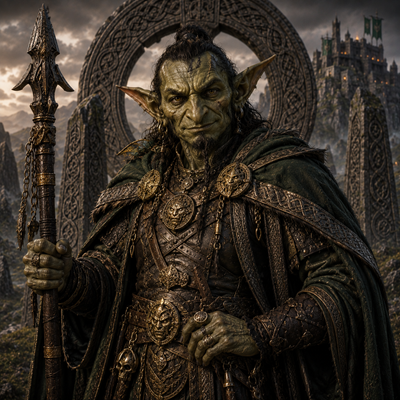
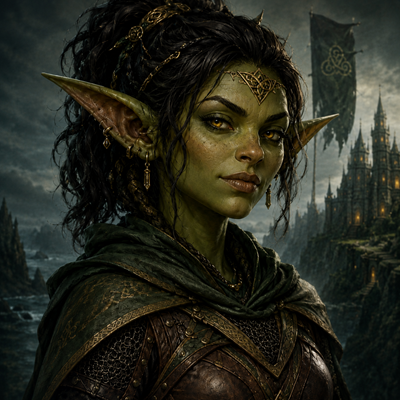
The Goblin Horde of Hy BrasilThe Goblin Horde is one of the most underestimated powers in Hy Brasil — and that is exactly how the goblins like it. Where humans adapt, elves remember, dwarves endure, and orcs smash through the enemy line, goblins survive by cunning, speed, numbers, trickery, opportunism, and ruthless practicality. They are not the strongest race. They are not the noblest. They are not the most trusted. But they are everywhere: in tunnels, markets, ruins, marshes, caves, forests, abandoned mines, borderlands, trade roads, and the shadows beneath stronger kingdoms. A foolish lord laughs at goblins. A wise lord counts the knives. The Goblin Horde is not always a single united nation. More often, it is a shifting mass of tribes, clans, tunnel-bands, raider families, merchant gangs, spy networks, scavenger guilds, and war camps. Goblins can be cowardly alone, dangerous in groups, and terrifying when a clever Goblin Lord or Lady unites them under one banner. They are the race of hidden paths, sharp bargains, night raids, poison whispers, stolen maps, tunnel warfare, and sudden betrayal. In Hy Brasil, goblins rarely win by strength. They win by making strength useless. The Tunnel ClansGoblin society is divided into tunnel clans, marsh tribes, market gangs, cave families, raider bands, and hidden city-states built beneath ruined castles or old mountain roads. Their settlements are often ugly to outsiders, but highly practical. A goblin town may look chaotic, yet every ladder, tunnel, escape door, hidden pit, storage hole, and murder slit exists for a reason. Goblins do not waste much time pretending life is fair. Their world is dangerous, so they become dangerous first. Goblin leaders rule through a mixture of fear, bribery, cleverness, bloodline, wealth, blackmail, and practical success. A Goblin Lord does not need to be the strongest fighter, though that helps. They need to be the one nobody can easily replace. A great Goblin Lord knows who owes money, who wants revenge, which tunnels flood in winter, which human merchant can be bribed, which orc chief is hungry for war, which dwarf gate has old cracks, and which elven patrol always takes the same moonlit path. Knowledge is power. Goblins hoard it like gold. Place in the Earth RealmThe gods of the Earth Realm watch the goblins with mixed feelings. Goblins are not naturally holy or noble, but neither are they naturally servants of darkness. They are survivors. Their religion is often practical, transactional, and local. A goblin may pray because they believe, because they are afraid, because a priest offered protection, or because it might improve their luck. Cernunnos may be honoured by goblins who live in wild places, hunt, trap, and survive through instinct. Brigid may attract goblin smiths, tinkerers, healers, brewers, fire-makers, and clever inventors. Gaia may be respected by marsh goblins, cave goblins, and clans that understand the danger of angering the land beneath their feet. The Mother Goddess may be honoured by goblin mothers, midwives, healers, and clans that value fertility and survival. Etain is less common, but goblin bards, trickster-poets, and clever diplomats may honour her in their own strange way. Belenus is feared more than loved by many goblins, because his light reveals hidden crimes. But some goblin clans do follow him, especially those who want to become more honourable, lawful, or respected by other races. Yaldabaoth can tempt goblins through systems, contracts, informers, bureaucracy, and the promise of status within an empire. Some goblins become very useful to him as spies, clerks, tax collectors, prison-keepers, and secret police. Moloch can tempt the cruelest goblins through raiding, sacrifice, terror, and revenge. Goblins corrupted by Moloch become kidnappers, fire-saboteurs, tunnel torturers, and battlefield scavengers of the worst kind. But most goblins serve themselves first. That makes them hard to control — even for gods. Goblin CunningThe greatest goblin weapon is not the blade. It is the plan behind the blade. Goblins are masters of dirty warfare: ambushes, traps, false retreats, night attacks, tunnels, raids, poison, misinformation, sabotage, hidden movement, stolen supplies, and surprise attacks against weak points. They do not consider this dishonourable. They consider it sensible. To a goblin, only an idiot fights a stronger enemy fairly. If orcs are the hammer, goblins are the nail hidden in the boot. They will not usually hold a shield wall against dwarves. They will not outshoot elves in a clean contest of archery. They will not outdiscipline humans in formation warfare. They will not overpower orcs in a frontal assault. So they do not try. They cut straps. They steal food. They poison wells. They light fires behind the line. They bribe guards. They fake surrender. They spread rumours. They open gates at night. They attack wounded soldiers. They surround isolated lords. They vanish before revenge arrives. This makes them hated, feared, and extremely useful. Goblin StrengthsGoblins are fast, numerous, cheap to recruit, quick to replace, and excellent at irregular warfare. Their population growth should be high, making them one of the easiest races to replenish after losses. They are good scouts, spies, tunnel fighters, raiders, thieves, traders, and saboteurs. They are especially dangerous when attacking weak settlements, supply lines, isolated armies, or enemies already engaged by stronger forces. A goblin army may struggle in a straight fight, but goblins should rarely choose straight fights. Their strongest advantage is numbers combined with trickery. Individually, a goblin warrior may not be impressive. In a swarm, in the dark, from three directions, after the enemy’s food has been stolen and their horses have been poisoned, goblins become terrifying. They are also good at trade of a questionable sort. Goblins can move goods through secret routes, black markets, hidden tunnels, and outlaw networks. This can make them useful even to rulers who claim to despise them. Goblin WeaknessesGoblins are physically weaker than most races. Their defence and morale should be poor if they are caught in open battle against disciplined troops. A dwarf shield wall, an orc charge, elven archery, or human cavalry can destroy goblin forces if the goblins cannot use terrain, numbers, or tricks. They may also have loyalty problems. Goblins are practical, and practical people do not like dying for hopeless causes. If a battle turns badly, goblin troops may break faster than dwarves, elves, or orcs. Their leaders must manage fear, greed, and opportunity. Goblins will follow a successful lord because success means loot and survival. But a weak goblin ruler may be betrayed, robbed, or quietly abandoned. Goblin diplomacy is also difficult. Other races distrust them. Even when goblins are telling the truth, few believe them. This can be unfair. It can also be wise. Preferred Battle StyleThe goblins prefer swarm tactics, ambush, raids, traps, sabotage, and opportunistic flanking. They are not good at honourable open warfare. They are not built to hold the centre of the line. Their ideal battle plan is: Avoid the main strength of the enemy, weaken them first, then swarm the exposed flank, rear, or broken unit. A goblin commander should ask: Where is the enemy tired? Where is the enemy hungry? Where is the enemy isolated? Where is the enemy’s baggage? Where is the gate guard corrupt? Where is the road narrow? Where is the swamp deep? Where is the tunnel forgotten? Goblins win by turning the battlefield into a problem the enemy did not expect. Horde Attack or Flanking Manoeuvre?Goblins can perform horde attacks, but their version is not the same as the orc horde. An orc horde attack is a brutal shock assault designed to break the enemy through strength. A goblin horde attack is a swarm: chaotic, fast, dirty, and opportunistic. It is best used against weakened, surrounded, or frightened enemies. So goblins should be good at: Swarm attacks and opportunistic flanking. They should not be as good as orcs in a direct horde charge. They should not be as elegant as elves in a clean flanking manoeuvre. Their identity sits between the two: They swarm, surround, distract, and stab. Their strongest tactic should be: Ambush swarm. They weaken the enemy first, then attack from multiple directions. Game AbilitiesIn gameplay terms, goblins should be the race of numbers, raids, spies, traps, and disruption. They should reward sneaky players who enjoy dirty tactics, fast movement, and asymmetric warfare. Suggested goblin racial traits: High Population Growth Cheap Recruitment Weak Individual Fighters Swarm Bonus Ambush Bonus Sabotage Experts Raider Culture Tunnel Fighters Low Morale in Open Battle Loot-Driven Loyalty Black Market Traders Goblin Stat IdentityGoblins can be described in simple gameplay language as: Attack: Low individually, Medium to High in swarms or ambushes Goblins are ideal for players who want to win through cunning rather than honour. Goblin Lords and LadiesGoblin Lords and Ladies are some of the most dangerous rulers in Hy Brasil because they rarely look dangerous at first glance. A goblin lord may be small, sharp-faced, and smiling — while already knowing where your children sleep, how much gold your steward stole, and which gate captain drinks too much. Goblin rulers are judged by results. Can they bring food? Can they bring loot? Can they keep the stronger races from crushing the clan? Can they trick enemies into fighting each other? Can they escape disaster before it happens? Female goblin lords can be especially feared as matriarchs, spy-queens, poison mistresses, trade bosses, or tunnel rulers. Among many goblin clans, cleverness is more important than size, and a cunning Lady can command warriors, merchants, thieves, and assassins with terrifying efficiency. A goblin ruler does not need to be loved. They need to be useful, feared, and lucky. Relationship with HumansGoblins and humans have a practical but suspicious relationship. Humans often dislike goblins, accusing them of theft, spying, cheating, smuggling, and betrayal. Goblins respond that humans do all the same things, but with prettier flags and longer speeches. Human lords may use goblins as scouts, traders, informants, smugglers, or disposable raiders. Goblins may use human kingdoms as markets, targets, employers, or shields against stronger enemies. A human-goblin alliance can be useful but unstable. Humans provide castles, law, armies, and legitimacy. Goblins provide information, raids, black-market trade, and dirty work. Both sides usually think they are using the other. Often, both are correct. Relationship with ElvesElves distrust goblins deeply. Elves value honour, memory, beauty, and sacred oaths. Goblins value survival, opportunity, secrets, and profit. To elves, goblins are slippery, disrespectful, and spiritually ugly. To goblins, elves are arrogant, dramatic, and far too serious about old songs. In warfare, elves and goblins are both subtle races, but in very different ways. Elves use precision, discipline, archery, and graceful manoeuvre. Goblins use trickery, traps, noise, misdirection, and swarms. An elf ambush is elegant. A goblin ambush is filthy. Both can kill you. Elves should never underestimate goblins. Goblins may not defeat elven archers in a clean fight, but they may burn the food stores, poison the horses, steal the maps, and lead the elves into a swamp. Relationship with DwarvesGoblins and dwarves are often bitter enemies, especially in mines, tunnels, mountains, and underground routes. Dwarves value honest craft, contracts, stonework, and ancestral law. Goblins value loopholes, hidden tunnels, stolen tools, and practical theft. Dwarves accuse goblins of being thieves, tunnel-rats, saboteurs, and oath-breakers. Goblins accuse dwarves of being greedy, slow, humourless, and easy to annoy. This rivalry can become violent quickly. Goblins are dangerous in tunnels because they know how to collapse passages, set traps, flood mines, and attack from crawlspaces too small for dwarven formations. Dwarves, however, are terrifying when they catch goblins in a straight fight. A dwarf axe in a narrow tunnel can end a goblin raid very quickly. Relationship with OrcsGoblins and orcs often work together in war, though the relationship is not equal. Orcs provide brute force, intimidation, and shock assaults. Goblins provide scouting, sabotage, supplies, tunnel routes, traps, and dirty tricks. Orcs may mock goblins as weak. Goblins may mock orcs as loud and easy to trick. But on the battlefield, they complement each other well. The goblins weaken the enemy. The orcs smash the weakened line. The goblins slip through the cracks. The orcs widen the breach. A clever orc lord values goblin support. A clever goblin lord stays useful enough that the orcs do not simply take what they want. Together, an orc-goblin horde can become one of the most dangerous aggressive forces in Hy Brasil. Religion Among the GoblinsGoblin religion is diverse and practical. Cernunnos is honoured by wild goblin clans who value survival, hunting, trapping, and instinct. Brigid is followed by goblin tinkerers, brewers, healers, fire-makers, and clever makers of strange devices. Gaia is respected by cave and marsh goblins who know that land, water, and stone can kill those who anger them. The Mother Goddess is honoured by clans focused on fertility, survival, children, and healing. Etain is followed by rare goblin bards, diplomats, entertainers, and court tricksters. Belenus is feared by many goblins because he exposes lies, but some reformist or honour-seeking goblin clans may honour him. Yaldabaoth appeals to goblins who want rank, paperwork power, secret police networks, and a place inside a great empire. Moloch appeals to cruel goblins who enjoy terror, kidnapping, sacrifice, and fire. These goblins are among the most hated in the Earth Realm. Most goblins, however, are religious in a way that outsiders find confusing. They may keep charms to three gods, pay respect to a fourth, curse a fifth, and still make a bargain with a priest of the sixth if the price is right. Goblin Strategy in the GamePlayers using goblins should not try to fight fair. Goblins are designed for players who enjoy trickery, mobility, raids, and asymmetric warfare. A strong goblin strategy might include: Expand quickly through cheap settlements and high population growth. Use scouts to find weak targets. Raid enemy trade routes and supplies. Avoid major open battles unless the enemy is weakened. Use ambushes in forests, marshes, ruins, tunnels, and night conditions. Support stronger allied troops with goblin disruption. Use sabotage before sieges. Attack isolated castles rather than strong fronts. Outnumber enemies before committing to battle. Keep troops loyal with loot and success. Use diplomacy carefully, knowing other races distrust goblins. Goblin players should think like predators of opportunity. Do not attack the strongest wall. Find the forgotten door. Final Lore SummaryThe Goblin Horde of Hy Brasil is the race of cunning, numbers, tricks, tunnels, raids, spies, black markets, and opportunistic warfare. Goblins are physically weak compared with most races, but they are fast, numerous, clever, and difficult to eliminate. They are not best at honourable open battle. They are best at ambush, sabotage, swarming, raiding, tunnel fighting, and attacking the enemy where they are weakest. Their greatest strengths are high population growth, cheap troops, scouting, sabotage, mobility, and dirty tactics. Their greatest weaknesses are low defence, poor morale in fair fights, weak individual combat, and low trust from other races. A goblin kingdom can become a nuisance, a trade power, a spy network, a raiding empire, or a terrifying shadow-horde beneath the castles of stronger peoples. In Hy Brasil, the goblins have one sacred rule: Never fight fair when unfair will win.
|
||