Home |
Games |
About |
News |
Forum |
|
|||||||||||||||||||||||
The Realm of Hy Brasil |
|||||||||||||||||||||||
The Races of Hy Brasil |
|||||||||||||||||||||||

The Dwarf Clans
The Dwarf Clan Theme
 |
 |
|
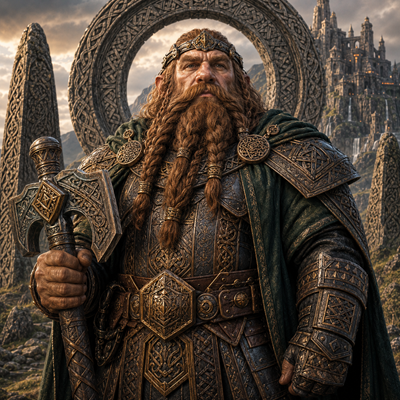
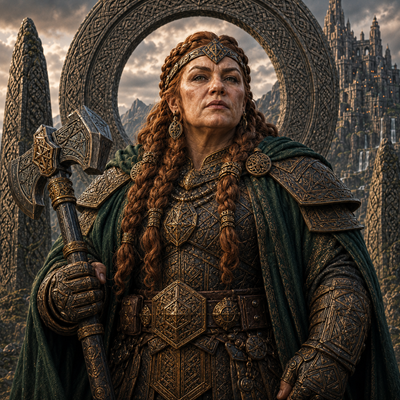
The Dwarves of Hy BrasilThe Dwarves of Hy Brasil are the children of stone, forge, oath, mountain, memory, and endurance. They are an ancient people who dwell in high mountain halls, cliffside fortresses, deep mines, underground kingdoms, and stone citadels carved into the bones of the Earth Realm. Where humans adapt, elves remember, orcs conquer, and goblins survive, the dwarves endure. They are not quick to trust. They are not quick to forgive. They are not quick to change. But when a dwarf gives their word, that oath may stand longer than the castle walls of mankind. Dwarven society is built upon craft, clan honour, ancestral law, stonework, metalwork, trade, and the sacred duty to preserve what has been handed down. A dwarf does not simply build a hall. A dwarf builds for their grandchildren’s grandchildren. Their fortresses are among the strongest in Hy Brasil. Their armouries produce some of the finest weapons and armour in the Earth Realm. Their engineers can raise walls, bridges, tunnels, gates, towers, and siege engines with unmatched precision. Their warriors may be slow, but they are hard to break, hard to frighten, and terrible to face in narrow ground. The dwarves are a race of patience, stubbornness, craft, and terrible revenge. The Mountain ClansDwarven society is divided into great mountain clans, forge families, mining houses, warrior brotherhoods, merchant guilds, and oath-bound noble lines. Each clan is tied to a hold, a mountain, a mine, a forge, or an ancestral hall. A dwarf lord or lady is expected to be more than a ruler. They must be the guardian of the clan’s honour, protector of its halls, keeper of its grudges, and defender of its craft secrets. Dwarven clans take bloodline seriously, but they also respect skill. A poor dwarf who becomes a master smith may rise in honour. A noble-born fool who wastes clan wealth may be remembered with shame in the stone records. The dwarves carve their histories into walls, pillars, tombs, gates, and clan stones. They do not trust memory alone. They believe that words spoken in air may be twisted, but words cut into stone endure. To insult a dwarf clan is dangerous. To cheat a dwarf clan is foolish. To betray a dwarf oath is to place your name into a book that may not close for centuries. Place in the Earth RealmThe race of gods who rule the Earth Realm watch the dwarves with respect. Dwarves are deeply tied to the powers of stone, craft, fire, oath, and endurance. They are not as spiritually changeable as humans, nor as mystical as elves, but when they choose a god, they tend to serve with discipline. Many dwarves honour Brigid, for she is the goddess of sacred fire, smithcraft, healing, wisdom, and the responsible use of power. Her forge-flame is beloved in many dwarf halls. Gaia is respected as the deep earth, stone, mountain, root, and balance beneath all things. Dwarves who follow Gaia are careful miners, stone-keepers, and guardians of mountain spirits. Belenus is honoured by warrior clans who value noble defence, radiant fire, oath-keeping, and righteous battle against darkness. The Mother Goddess is respected by dwarven healers, family clans, and settlement guardians, though dwarves often understand her through the hearth, home, children, and clan survival. Cernunnos is less commonly followed in deep mountain holds, but frontier dwarves, hill clans, and wild forge-warriors may honour his strength, endurance, and ancient law of survival. Etain is honoured by dwarf jewellers, singers, court artisans, and clans who value beauty in crafted things. Dwarves despise Moloch because he corrupts the sacred purpose of fire and forge. They distrust Yaldabaoth because he seeks to bind all craft, law, and labour beneath one imperial will. No dwarf likes being told their forge belongs to another throne. Dwarves and CraftFor the dwarves, craft is not merely labour. It is religion, identity, and ancestral duty. A sword is not just a sword. It is the work of the miner who found the ore, the smelter who purified it, the smith who shaped it, the rune-carver who marked it, the warrior who carries it, and the clan whose honour it represents. Dwarven armour is famed across Hy Brasil. Even human kings and elf lords may seek dwarf-made mail, axes, shields, and siege engines. A dwarf-forged breastplate can become an heirloom. A dwarf oath-ring can seal alliances. A dwarf hammer can carry a clan’s history in every mark upon its head. This makes dwarves powerful traders and valuable allies. But their craft secrets are guarded fiercely. A ruler who gains the friendship of dwarven smiths may strengthen their entire realm. A ruler who tries to steal from them may find every gate closed and every mountain pass watched. Dwarven StrengthsThe dwarves are strong in defence, endurance, armour, siegecraft, mining, construction, and close-quarters battle. They are among the best races in the game for holding castles, mountain passes, fortified towns, mines, and strong defensive lines. Their troops are usually slow but tough. They do not panic easily. They can take punishment that would break lighter troops. Their shield walls and armoured infantry are extremely reliable. Dwarves are also excellent builders. They can improve castles, mines, armouries, walls, gates, and defensive structures. A dwarf-held fortress should feel like a nightmare to attack. Their weapons and armour should be among the best in Hy Brasil. Even if they do not have the largest armies, they can make each warrior count. Dwarven WeaknessesThe dwarves are not fast. They should struggle with rapid movement, long-distance pursuit, open-field manoeuvre, and flexible scouting compared with elves, goblins, or cavalry-based human forces. They also have limited population growth. Dwarves should reproduce slowly, perhaps slightly better than elves but slower than humans, orcs, and goblins. Their warriors are valuable and hard to replace. Dwarves may also be stubborn in diplomacy. They are loyal once an oath is sworn, but hard to persuade if insulted. They may resist sudden changes in religion, alliance, or strategy. Their other weakness is terrain. Dwarves are strongest in mountains, hills, tunnels, fortresses, and defensive ground. On wide open plains, against fast enemies, they can be outmanoeuvred. A dwarf army caught in the open by skilled flankers may struggle if it cannot anchor itself to terrain. Preferred Battle StyleThe dwarves prefer defensive warfare, shield walls, attrition, siege defence, and crushing counter-attacks. They are not a horde race. They do not fight best by rushing forward in a wild mass. They prefer to hold strong positions, let the enemy waste strength against them, then strike back with axes, hammers, and disciplined infantry. Their ideal battle plan is: Take the strong ground, hold the line, break the enemy’s charge, then counter-attack. Dwarven armies are at their best in: Mountain passes. Castle gates. Fortified hills. Narrow valleys. Bridges. Tunnels. Mine entrances. Walled settlements. Ruined stone circles or defensible sacred sites. They want the enemy to come to them. When the enemy is tired, disordered, and trapped against a wall of shields, the dwarves strike. Horde Attack or Flanking Manoeuvre?Dwarves are poor at horde attacks and only average at flanking manoeuvres. Their best tactic is not horde or flank. Their best tactic is: Hold-and-counter. A dwarf army wins by absorbing the enemy’s attack and then crushing them when they lose momentum. They are not as elegant as elves, not as flexible as humans, and not as brutal in the charge as orcs. But they are extremely hard to move. If humans are balanced commanders and elves are ambush specialists, dwarves are the wall. A dwarf lord does not ask, “How do I chase the enemy?” A dwarf lord asks, “Where can I make the enemy break themselves?” Game AbilitiesIn gameplay terms, dwarves should be a defensive, industrial, and high-endurance race. They reward players who like castles, armour, strongholds, mines, slow expansion, and carefully prepared wars. Suggested dwarven racial traits: Stoneborn Defence Master Smiths Shield Wall Discipline Siege Engineers Hard to Break Slow Marchers Low to Moderate Population Growth Mining Experts Oath-Keepers Counter-Attack Bonus Dwarven Stat IdentityDwarves can be described in simple gameplay language as: Attack: Medium to High in close combat Dwarves are ideal for players who like strong castles, careful planning, quality equipment, and armies that refuse to break. Dwarven Lords and LadiesDwarven Lords and Ladies are stern, practical, honour-bound, and deeply tied to their clan’s history. They are often trained in warfare, law, mining rights, trade, clan genealogy, and the management of forges and strongholds. A dwarf lord is expected to stand firm when others flee. A dwarf lady may command a fortress, oversee a forge, lead warriors, judge clan disputes, or hold together an alliance through iron discipline. Dwarven rulers are usually judged by what they preserve and what they build. A human lord may be praised for a daring campaign. An elf lord may be praised for elegance and wisdom. A dwarf lord is praised when the walls stand, the clan prospers, the oath is kept, and the ancestors are not shamed. A dwarf ruler who wastes warriors in foolish battles may lose respect quickly. Dwarf soldiers expect their leaders to be brave, but not reckless. Courage is admired. Stupidity is not. Relationship with HumansDwarves often see humans as useful, ambitious, and unreliable. Humans buy dwarf weapons, hire dwarf engineers, seek dwarf alliances, and then sometimes forget the promises they made when desperate. This annoys dwarves greatly. Still, human-dwarf alliances are common because they make practical sense. Humans provide numbers, farmland, diplomacy, and flexibility. Dwarves provide armour, engineering, stonework, and defensive strength. A human castle with dwarf engineers becomes stronger. A human army with dwarf-made armour becomes harder to kill. A dwarf hold with human grain routes becomes safer during siege. The alliance works best when humans respect dwarf contracts and dwarves accept that humans move faster than stone. Relationship with ElvesDwarves and elves have a proud and complicated relationship. Elves value living beauty, ancient forests, elegance, songs, and spiritual memory. Dwarves value stone, craft, metal, fortresses, ancestral records, and material endurance. Elves may think dwarves wound the earth with too much mining. Dwarves may think elves are too delicate, proud, and impractical. Yet the two races have much in common. Both are ancient. Both remember deeply. Both value craft, honour, ancestry, and long-term thinking. When they cooperate, they can create wonders: elf magic joined with dwarf craft, elven archers guarding dwarf walls, dwarf armour protecting elven nobles, and shared defences against dark powers. The problem is pride. Neither likes admitting the other may be right. Relationship with OrcsDwarves respect orc strength but distrust orc recklessness. Orcs are powerful in the charge, fierce in melee, and difficult to frighten. Dwarves understand strength, but they dislike wasteful brutality. Orcs may see dwarves as stubborn rocks hiding behind walls. Dwarves may see orcs as loud fools who mistake rage for strategy. In battle, dwarves are one of the best counters to orc horde tactics. A disciplined dwarf shield wall in strong terrain can absorb an orc charge and punish it severely. However, an alliance between dwarves and orcs can be devastating if managed properly. Dwarves hold the line. Orcs smash the enemy flank. Dwarves build the armour. Orcs bring the fury. Such alliances are rare, but terrifying. Relationship with GoblinsDwarves rarely trust goblins. Goblins are clever, opportunistic, sneaky, and fond of shortcuts. Dwarves value contracts, records, craft quality, and honourable trade. This creates natural tension. Dwarves accuse goblins of cheating weights, cutting corners, stealing tools, and selling information. Goblins accuse dwarves of being humourless, slow, overpriced, and impossible to haggle with. Yet trade still happens. Goblins can bring rare goods, rumours, underground routes, and black-market items. Dwarves may deal with them when useful, but they count the coins twice and lock the storehouses afterward. In war, goblins can be dangerous to dwarves because they use sabotage, tunnels, traps, and raids. A wise dwarf lord never ignores goblin movement near mines or gates. Religion Among the DwarvesBrigid is one of the most important goddesses to many dwarf clans. Her sacred fire, smithcraft, healing, poetry, and wisdom align closely with dwarven values. Gaia is also deeply respected, especially by clans who see mountains and stone as living sacred powers. Gaia-aligned dwarves mine carefully and treat the deep earth with reverence. Belenus is followed by noble warrior clans who value honour, light, oath, and righteous defence. The Mother Goddess is honoured among family clans, healers, and settlements that value fertility, hearth, children, and protection of the home. Etain is honoured by jewel-smiths, musicians, hall-builders, and dwarf artists who believe beauty can be forged as surely as steel. Cernunnos is less central, but hill dwarves, frontier clans, and wild mountain hunters may respect him. Yaldabaoth may tempt some dwarves through order, hierarchy, law, and imperial organisation, but most dwarves reject his attempt to claim all craft and rule beneath one throne. Moloch is hated by most dwarves because he turns sacred fire into furnace horror. To a dwarf, Moloch is not merely evil — he is an insult to the forge. Dwarven Strategy in the GamePlayers using dwarves should think in terms of territory, fortification, supply, and quality over speed. Dwarves are not ideal for reckless expansion across open lands. They are strongest when they secure valuable positions and make them nearly impossible to take. A strong dwarven strategy might involve: Claim hills and mountains early. Build mines, armouries, and strong walls. Train fewer but tougher troops. Use defensive terrain wherever possible. Avoid unnecessary long marches. Let enemies attack fortified positions. Use counter-attacks after enemy assaults fail. Trade weapons and armour for food, gold, or alliances. Use diplomacy carefully and keep oaths. Avoid wasting troops in bad terrain. Dwarves should feel like a slow-building powerhouse. They may not dominate the early map through speed, but once their strongholds and armouries are established, they become extremely difficult to dislodge. Final Lore SummaryThe Dwarves of Hy Brasil are the race of stone, forge, oath, mountain, endurance, and ancestral memory. They are master builders, miners, smiths, engineers, and defenders. Their armies are slow but tough, their fortresses are mighty, and their grudges are long. They do not favour horde attacks. They are not natural flankers. Their strength lies in defensive warfare, shield walls, strong terrain, siegecraft, and devastating counter-attacks. Their greatest strengths are defence, armour, smithing, mining, building, morale, and endurance. Their greatest weaknesses are slow movement, low population growth, stubborn diplomacy, and vulnerability to fast manoeuvre in open terrain. A dwarven kingdom may expand slowly, but what it holds, it holds with iron, stone, and oath. To face dwarves in the open may be difficult. To attack them in their own halls is madness. Their teaching is simple: Build deep. Stand firm. Keep the oath. And let the enemy break upon the stone.
|
||