Home |
Games |
About |
News |
Forum |
|
|
|
|||||||
The Realm of Hy Brasil |
|||||||
The Race of Gods of Hy Brasil |
||||
The Good Gods |
The Neutral Gods |
The Evil Gods |
||
 |
 |
 |
 |
 |
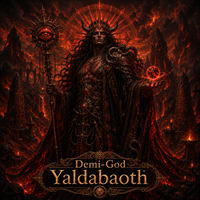
The Demi-God Yaldabaoth Theme
The Demi-God Yaldabaoth
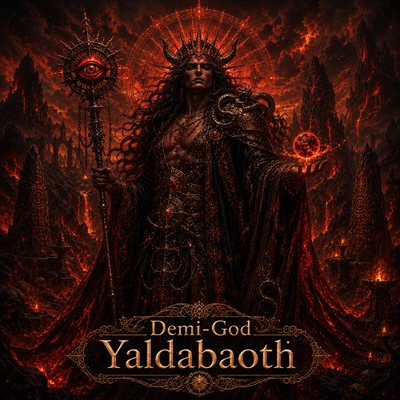
Yaldabaoth
Yaldabaoth is one of the two evil demi-gods who threaten the Earth Realm. He is known by many names: the False Creator, the Lord of the Iron Crown, the Blind Demiurge, the Golden Tyrant, the Father of Chains, and the Conqueror of the Mortal Will.
Where Moloch devours through terror, blood sacrifice, and open brutality, Yaldabaoth conquers through pride, law, false wisdom, empire, and spiritual control. He does not always appear as a monster. To the weak, the ambitious, and the frightened, he may appear as a god of order. He promises peace. He promises unity. He promises an end to chaos, war, hunger, and uncertainty.
But the peace of Yaldabaoth is the peace of a prison.
His followers do not believe mortals should be free. They believe mortals are flawed creatures who must be ruled, corrected, disciplined, watched, classified, and made obedient. They believe the Earth Realm should be brought under one perfect throne, one perfect law, one perfect empire, and one unquestioned divine will.
That will is Yaldabaoth.
He is a conquering demi-god, not merely a corrupting spirit. His ambition is not to destroy the Earth Realm, but to possess it. He wishes to overthrow the natural order of the old gods and replace the living world with a rigid empire of command, hierarchy, obedience, and spiritual slavery.
To Yaldabaoth, freedom is disorder.
Mercy is weakness.
Nature is imperfection.
The old gods are rivals.
And mortal souls are property waiting to be claimed.
The False Light
Yaldabaoth is dangerous because he does not always come wrapped in darkness. His temples may shine with gold. His priests may wear white robes. His soldiers may carry banners of law, purity, civilisation, and divine purpose. His missionaries may speak of peace, progress, and salvation.
This is why many call him the Lord of False Light.
He does not begin by saying, “Submit and be enslaved.”
He says, “Let me protect you.”
He says, “Let me bring order.”
He says, “Let me end your suffering.”
He says, “Let me decide what is best.”
By the time a kingdom realises what it has accepted, its laws have changed, its temples have been replaced, its druids have been silenced, its people have been numbered, its children have been taught to fear the old gods, and its rulers have become servants of the Iron Crown.
Yaldabaoth does not only conquer with armies. He conquers through systems.
He conquers through courts, scribes, tax collectors, informers, priest-kings, imperial governors, and sacred laws that cannot be questioned. He turns faith into obedience, obedience into fear, and fear into worship.
Origin in the Game World
In the oldest myths of Hy Brasil, Yaldabaoth was not born among the true gods of the Earth Realm. Some druids claim he came from beyond the veil, from a cold and broken region of the heavens where divine beings tried to create worlds without love, nature, or soul. Others say he was once a lesser divine craftsman who became drunk on his own power and declared himself creator of all things.
The truth is hidden in forbidden texts, but the oldest priesthoods agree on one thing: Yaldabaoth looked upon the living Earth Realm and hated its freedom.
He hated that forests grew without permission.
He hated that beasts followed instinct rather than law.
He hated that mortals loved, rebelled, dreamed, sang, and worshipped gods other than himself.
He hated that the Mother Goddess gave life freely.
He hated that Cernunnos taught strength without obedience.
He hated that the old gods shared influence instead of bowing to a single throne.
So Yaldabaoth decided the Earth Realm must be corrected.
Not burned.
Not merely conquered.
Corrected.
He would remake the world into a divine machine, with every mortal life given a place, every soul watched, every prayer directed upward to him, and every land placed beneath his golden law.
Enemy of the Race of Gods
The Earth Realm is ruled by a race of gods who expect their followers to behave according to their religion. These gods may disagree with each other, argue, compete for followers, and demand different forms of worship, but most of them accept that the world is a living balance of many divine powers.
Yaldabaoth rejects this completely.
He does not see the gods of the Earth Realm as fellow divine beings. He sees them as obstacles, rebels, and false powers standing between him and total dominion. In his doctrine, there can be only one divine authority. All other gods must be exposed as demons, lies, primitive spirits, or enemies of order.
This makes him especially dangerous to the religious structure of Hy Brasil. A kingdom that falls under his control does not merely change allegiance. It may begin persecuting other faiths, closing temples, burning sacred groves, and forcing conquered peoples to abandon their gods.
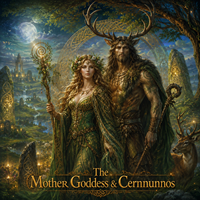
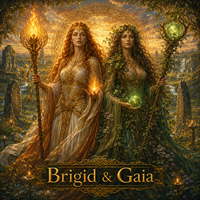
To the followers of the Mother Goddess, Yaldabaoth is a blasphemer against life itself.
To the followers of Cernunnos, he is a cage-builder and soul-thief.
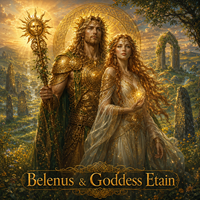
To the followers of Belenus, he is a false sun, a golden light that gives no warmth.
To the neutral gods, he is imbalance made divine.
Yaldabaoth does not want a place among the gods.
He wants their thrones.
Yaldabaoth and the Mother Goddess
Yaldabaoth despises the Mother Goddess because she represents everything he cannot control: fertility, compassion, family, healing, birth, harvest, mercy, and the sacred independence of the living land.
The Mother Goddess teaches that the land is alive and must be honoured. Yaldabaoth teaches that land is territory to be measured, taxed, divided, and ruled.
The Mother Goddess teaches that rulers must protect their people. Yaldabaoth teaches that people exist to serve the sacred state.
The Mother Goddess values mercy. Yaldabaoth sees mercy as a flaw in governance.
He is especially hostile to her priestesses, for they hold deep loyalty among common people. In lands conquered by Yaldabaoth, the shrines of the Mother Goddess are often the first targets. Sacred wells are sealed. Birth rites are forbidden. Harvest festivals are replaced with imperial ceremonies. Priestesses are accused of witchcraft, treason, or sedition.
Yet Yaldabaoth fears her more than he admits.
For wherever mothers whisper old prayers to their children, wherever seeds are blessed in secret, wherever a village still gathers by a hidden well beneath the moon, the Mother Goddess remains present. Yaldabaoth can conquer a city, but he struggles to conquer the love between mother and child, the memory of old songs, and the stubborn hope of the living earth.
Yaldabaoth and Cernunnos
If the Mother Goddess is the life Yaldabaoth wishes to regulate, Cernunnos is the wildness he wishes to break.
Cernunnos represents instinct, strength, beasts, forests, hunters, and the ancient freedom of the natural world. Yaldabaoth sees all of this as primitive chaos. He despises the horned god because Cernunnos cannot be domesticated, reasoned into submission, or made to kneel before imperial law.
In conquered lands, the followers of Yaldabaoth often cut roads through sacred forests, mark hunting grounds as state property, kill sacred animals, and build watchtowers where groves once stood. They fear the deep woods because the laws of Yaldabaoth grow weaker there.
Cernunnos’ followers are among Yaldabaoth’s most hated enemies. They are difficult to control, skilled in the wild, loyal to old oaths, and willing to fight long wars from forest, hill, and hidden valley.
Yaldabaoth calls them savages.
Cernunnos calls them free.
This is one reason Cernunnos may disagree with the Mother Goddess over tactics. The Mother Goddess may seek to save the deceived followers of Yaldabaoth where possible. Cernunnos is less patient. He believes that Yaldabaoth’s cult must be hunted before it becomes an empire, because once his laws take root, entire generations may be born into chains.
Relationship with Moloch
Yaldabaoth and Moloch are both evil demi-gods, but they are not true allies in spirit.
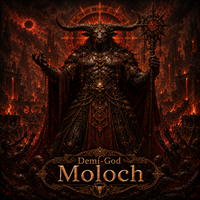
Moloch is hunger, sacrifice, tyranny, and devouring power. He delights in fear, blood, domination, and the crushing of the weak beneath the strong. His followers are often brutal, fanatical, and openly monstrous.
Yaldabaoth considers Moloch crude.
Moloch considers Yaldabaoth cold and cowardly.
Yet their goals may overlap. Both seek dominion. Both despise the freedom of the old gods. Both corrupt mortal rulers. Both are enemies of the Earth Realm’s sacred balance.
When their cults cooperate, the result is terrifying. Yaldabaoth builds the empire. Moloch feeds it with blood. Yaldabaoth writes the laws. Moloch fills the prisons. Yaldabaoth demands obedience. Moloch punishes disobedience.
But such alliances are unstable. Yaldabaoth wants order. Moloch wants appetite. Yaldabaoth wants subjects. Moloch wants offerings. Yaldabaoth wants an eternal empire. Moloch would burn half the world if the flames pleased him.
A clever player may exploit this rivalry.
A foolish player may be destroyed by both.
What Yaldabaoth Expects of His Followers
Yaldabaoth expects complete obedience. His religion is not based on love, balance, or mutual respect between god and follower. It is based on hierarchy.
Every person has a place.
Every place has a superior.
Every superior answers to a higher authority.
At the top stands Yaldabaoth.
His followers are expected to:
Obey divine law without question.
Conquer weaker realms and bring them under the Iron Crown.
Replace rival religions with the worship of Yaldabaoth.
Build temples, courts, prisons, archives, and watchtowers.
Record populations, taxes, military strength, and religious loyalty.
Punish rebellion harshly.
Suppress druids, priestesses, wild cults, and independent religious orders.
Value order above freedom.
Value conquest above peace.
Value obedience above conscience.
Spread the doctrine that Yaldabaoth is the true lord of the Earth Realm.
A ruler who follows Yaldabaoth may gain powerful tools of control, but they must accept the price. Their realm becomes colder, harsher, more rigid, and less free. Their people may become obedient, but obedience is not the same as loyalty.
Temples and Symbols
The temples of Yaldabaoth are grand, severe, and intimidating. They are often built of pale stone, black iron, and gold. They favour straight lines, high columns, towering doors, vast courts, and statues of crowned divine figures looking down upon kneeling mortals.
Where the Mother Goddess has sacred wells and living groves, Yaldabaoth has courts of judgement.
Where Cernunnos has forests and standing stones, Yaldabaoth has iron gates and imperial roads.
His sacred symbols may include:
The Iron Crown.
The Golden Eye.
The Broken Halo.
The Chain of Law.
The Sun Without Warmth.
The Throne Above the World.
His priests often serve as judges, governors, scribes, and inquisitors. They are not merely spiritual figures. They are administrators of divine rule. They record sins, collect confessions, manage loyalty, and advise rulers on how to cleanse the realm of disobedience.
In Yaldabaoth’s faith, law is worship.
Punishment is prayer.
Conquest is salvation.
Armies of the Iron Crown
Yaldabaoth’s armies are disciplined, organised, and terrifying in their obedience. They are not wild raiders or blood-crazed cultists. They march beneath imperial banners, clad in dark iron and gold, with priests walking among them to chant laws of conquest.
His soldiers believe they are not merely invading lands. They believe they are correcting them.
They may offer surrender before battle, but surrender means submission, taxation, religious conversion, hostage-taking, and the dismantling of old temples. Those who refuse are declared enemies of divine order.
Yaldabaoth’s generals are often cold and methodical. They prefer sieges, roads, supply lines, spies, informers, and political infiltration before open war. They turn local nobles against one another, promise order to frightened towns, and offer ambitious rulers a place within the coming empire.
By the time his armies arrive, half the conquest may already be complete.
Divine Blessings
Yaldabaoth can be very powerful for a player who wants an empire of conquest, administration, and control. His blessings are not gentle, but they are effective.
Possible blessings in the game world may include:
Stronger control over conquered settlements.
Reduced rebellion chance through fear and surveillance.
Improved tax collection.
Faster construction of roads, courts, prisons, and administrative buildings.
Improved army discipline.
Bonuses to siege warfare.
Better spy networks and informers.
Increased conversion pressure against rival religions.
Stronger authority over vassals.
Improved ability to suppress unrest.
Bonuses when fighting disorganised or divided enemies.
Greater efficiency in large empires.
Yaldabaoth’s blessings make expansion easier to manage, especially for a player who wants to rule through law, fear, and hierarchy. His religion may suit a cold imperial playstyle: conquer, convert, organise, tax, and suppress.
Divine Wrath
Yaldabaoth does not tolerate weakness or disobedience from his own followers. A ruler who worships him but fails to expand, allows rival temples to flourish, shows too much mercy to rebels, or refuses to enforce divine law may lose his favour.
His punishments may include:
Loss of authority in conquered lands.
Increased unrest among zealots.
Priests turning against the ruler.
Reduced tax efficiency.
Reduced army discipline.
Religious courts accusing nobles of corruption.
Fanatical factions demanding harsher laws.
Inquisitors acting without the ruler’s permission.
Temples withholding support.
Civil conflict between moderate and extreme followers.
In extreme cases, Yaldabaoth may decide that the ruler is unworthy of the Iron Crown. His priesthood may support a coup, rebellion, or rival claimant who promises greater obedience to the demi-god’s law.
Those who serve Yaldabaoth do not own power.
They borrow it.
And he may reclaim it.
Yaldabaoth in the Game
In Lords of Hy Brasil, Yaldabaoth should feel like the path of dark empire. His religion is designed for players who want conquest, control, heavy administration, religious domination, and ruthless stability.
A Yaldabaoth-aligned realm may become extremely dangerous if allowed to grow. It can absorb conquered lands, crush unrest, spread its faith, and build a terrifying imperial machine. It may not have the warmth, loyalty, or natural abundance of the Mother Goddess, nor the wild strength and freedom of Cernunnos, but it has structure, discipline, law, and the power to turn kingdoms into provinces.
However, this path should come with moral and strategic costs.
The people may fear the ruler more than they love them.
Other gods may despise the realm.
Followers of the Mother Goddess and Cernunnos may form alliances against it.
Rebellions, when they come, may be fierce because they are not only political but spiritual.
Yaldabaoth offers power, but never freedom.
He offers order, but never peace.
He offers conquest, but never true loyalty.
To follow Yaldabaoth is to build an empire of iron beneath a golden sky — magnificent from a distance, but cold to the touch.
In the end, every ruler who kneels before him must ask one question:
Am I the master of this empire, or merely the highest slave within it?