Home |
Games |
About |
News |
Forum |
|
|||||||
The Realm of Hy Brasil |
|||||||
The Race of Gods of Hy Brasil |
||||
The Good Gods |
The Neutral Gods |
The Evil Gods |
||
 |
 |
 |
 |
 |
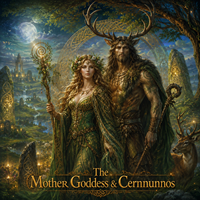
The Mother Goddess Theme
The Mother Goddess
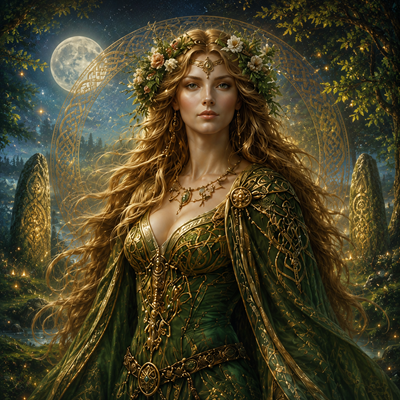
The Mother Goddess
The Mother Goddess is the ancient heart of the Earth Realm, the divine source of fertility, protection, birth, mercy, and the sacred bond between land and people. Among the gods of Hy Brasil, she is revered as the Great Mother, the Lady of the Living Earth, the Keeper of Hearth and Harvest, and the gentle but unbreakable guardian of all growing things.
In the old faiths of the Celtic peoples, many goddesses were associated with the land, sovereignty, fertility, rivers, healing, motherhood, and the turning of the seasons. The Mother Goddess of Hy Brasil draws from these ancient traditions. She is not merely a goddess of childbirth or family, but a divine embodiment of the living world itself. Fields, forests, rivers, beasts, clans, and kingdoms all fall beneath her gaze.
To her followers, the land is not dead soil to be owned and exploited. It is sacred. It is alive. It is the body of the Goddess.
Where her temples stand, flowers bloom even in hard seasons. Where her priestesses bless the fields, the harvest is said to grow strong. Where her people honour her laws, children are born healthy, livestock flourish, and the old forests remain protected from reckless destruction.
Yet the Mother Goddess is not weak. Her mercy is deep, but it is not endless. Those who poison rivers, burn sacred groves, slaughter innocents, betray kin, or wage war for greed alone may find that the gentle mother can become the terrible mother. She gives life, but she may also withdraw it.
Divine Role in the Earth Realm
The gods of Hy Brasil are not distant spirits watching silently from beyond the stars. They are a divine race who guide, judge, and shape the Earth Realm. Each god expects their followers to live according to the sacred laws of their religion. Worship is not simply a matter of building temples or speaking prayers. A ruler’s actions, alliances, wars, trade, mercy, cruelty, and treatment of the land all determine whether the gods look upon them with favour or anger.
The Mother Goddess expects her followers to protect life, honour the land, care for their people, and rule with wisdom rather than vanity. She favours kings and queens who see their subjects not as tools of conquest, but as children of the realm placed under their protection.
Her followers believe that a ruler who cannot feed the poor, protect the weak, and honour the earth has no true right to rule.
Relationship with Cernunnos
The Mother Goddess is the divine lover of Cernunnos, the horned god of the wild, the hunt, beasts, forests, masculine fertility, instinct, and untamed nature. Together they represent the great balance of the living world.
The Mother Goddess is the fertile earth, the hearth, the mother, the field, the river, and the clan.
Cernunnos is the forest, the stag, the hunt, the wild storm, the hunger of beasts, and the ancient law of survival.
Their bond is one of love, passion, and sacred balance. She understands his wildness, and he honours her life-giving power. Many of her followers are encouraged to live in peace with the followers of Cernunnos, for their religions are deeply connected. A kingdom that honours both may become strong in harvest, warriors, beasts, and natural magic.
However, the Mother Goddess does not always agree with Cernunnos.
Where Cernunnos may accept harsh survival, blood sacrifice, brutal tests of strength, or the ruthless law of predator and prey, the Mother Goddess often demands restraint. She believes strength must protect life, not merely dominate it. She may approve of war when it is fought in defence of home, clan, sacred land, or innocent people, but she dislikes needless slaughter.
Cernunnos may say, “The weak must learn to survive.”
The Mother Goddess may answer, “The strong exist to protect them.”
This divine disagreement creates tension between their priesthoods. In most ages, their followers are natural allies. Yet when Cernunnos’ worshippers become too savage, or when the Mother Goddess’ followers become too soft and passive, the balance between the two faiths can fracture.
A wise ruler honours both: the mercy of the Mother and the strength of the Horned One.
What She Expects of Her Followers
The Mother Goddess expects her followers to live according to sacred principles. These are not merely moral suggestions. In Hy Brasil, the gods watch the actions of rulers and may bless or punish kingdoms accordingly.
Her followers are expected to:
Protect the land, forests, rivers, farms, and sacred groves.
Care for their people, especially children, the old, the wounded, and the poor.
Avoid needless wars of greed or vanity.
Defend the homeland fiercely when threatened.
Treat fertility, birth, family, and community as sacred gifts.
Honour women, mothers, healers, farmers, and priestesses.
Respect animals and avoid wasteful slaughter.
Build temples, shrines, healing houses, and sacred gardens in her name.
Share food during famine where possible.
Rule with mercy, but not weakness.
A player who follows the Mother Goddess should not behave like a tyrant, destroyer, or butcher. She may tolerate necessary war, but she does not bless cruelty for its own sake.
Divine Blessings
When pleased, the Mother Goddess may bless her followers with abundance, growth, healing, and protection. Her blessings are most often felt in the life of the kingdom rather than in sudden displays of violence.
Possible blessings in the game world may include:
Greater harvest yields from farms.
Improved population growth.
Better recovery after plague, famine, or war.
Increased loyalty among common people.
Improved morale when defending homeland territory.
Healing bonuses for wounded troops.
Protection against blight, disease, or cursed lands.
Stronger fertility and birth rates in castles and settlements.
Improved relations with Cernunnos-aligned factions.
Reduced unrest in well-governed lands.
Her blessings are powerful because they strengthen the foundation of a realm. Other gods may grant sharper swords or darker magic, but the Mother Goddess grants what every kingdom truly needs: people, food, loyalty, and life.
Divine Wrath
The Mother Goddess is patient, but she is not blind. A ruler who claims to follow her while poisoning the land, starving their people, burning forests, murdering innocents, or using war as sport may fall under her judgement.
Her punishments may include:
Poor harvests.
Falling population growth.
Disease among livestock.
Civil unrest among common people.
Lower morale in armies fighting aggressive wars.
Temple discontent.
Loss of priestess support.
Sacred groves becoming silent and barren.
A decline in divine favour.
In extreme cases, her wrath may manifest as famine, plague, rebellion, or the withdrawal of all fertility from a cursed ruler’s lands.
Her anger is rarely sudden. She gives warnings first. The fields may grow thin. The rivers may darken. Children may dream of a weeping woman in green. Flowers may wither around her shrines. If the ruler continues down a path of cruelty, then the Mother’s sorrow becomes judgement.
Temples and Priestesses
The temples of the Mother Goddess are often built near rivers, ancient wells, stone circles, fertile valleys, or sacred groves. They are places of healing, childbirth, blessing, harvest rites, and judgement.
Her priestesses hold great influence among the people. They bless marriages, births, fields, and rulers. They also serve as moral guardians, warning kings and queens when they stray too far from the sacred way.
A ruler who honours her priestesses may gain stability and loyalty. A ruler who insults, imprisons, or kills them may find the people turning against them, for the priestesses are often loved by common folk.
The Mother Goddess does not require her temples to be grand palaces of gold. A simple shrine beside an old oak tree may please her more than a vast temple built by slaves.
Relationship with Other Gods
The Mother Goddess is one of the great powers of the divine race who rule the Earth Realm. She is generally counted among the good gods, though she is not naïve. She understands that kingdoms must sometimes fight, borders must sometimes be defended, and evil must sometimes be destroyed.
She is naturally close to Cernunnos, though their followers may sometimes argue over the proper balance between mercy and strength.
She may look kindly upon gods of light, healing, wisdom, fertility, nature, and honour.
She may oppose gods or demi-gods who encourage corruption, greed, cruelty, slavery, unnatural destruction, or the domination of the weak.
She does not hate war gods by nature, but she judges the reason for war. A defensive war to protect the innocent may be sacred. A war of greed may be sinful. A war of extermination may call down her wrath.
The Mother Goddess in the Game
In Lords of Hy Brasil, choosing to follow the Mother Goddess should feel like choosing a path of growth, stability, fertility, healing, and moral responsibility. Her religion is ideal for players who wish to build a strong realm from the inside, protect their people, and rule through loyalty rather than terror.
Her path may not offer the most aggressive early-game conquest bonuses, but it can create one of the strongest long-term kingdoms. A realm blessed by the Mother Goddess can grow in population, recover from disaster, resist unrest, and feed great armies.
However, her followers must be careful. A player who worships the Mother Goddess but behaves like a bloodthirsty conqueror may lose her favour. Her religion rewards wise rulership, measured war, defence of the homeland, and respect for the living earth.
The Mother Goddess does not ask her followers to be weak.
She asks them to be worthy.