Home |
Games |
About |
News |
Forum |
|
||||||||||||||||
The Realm of Hy Brasil |
||||||||||||||||
|
||||||||||||||||
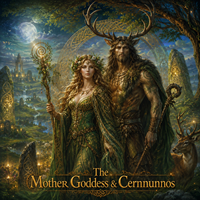
The God Cernunnos Theme
The God Cernnunos
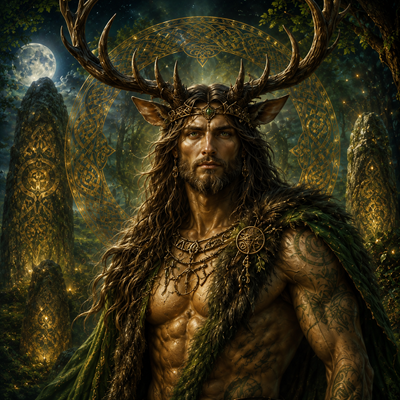
Cernunnos
Cernunnos is the ancient Horned God of the wild places, lord of beasts, forests, instinct, fertility, strength, survival, and the untamed law of nat ure. Among the divine race who rule the Earth Realm, he is one of the oldest and most feared of the good gods. He is not a gentle god in the way mortals understand gentleness, nor is he cruel in the manner of tyrants. He is the power of the living world before kings built castles, before priests wrote laws, and before men believed they could command the earth.
He is the stag in the moonlit forest.
He is the wolf’s hunger.
He is the hunter’s breath in winter.
He is the seed beneath the soil, the roar of rutting beasts, the silence before the arrow flies, and the old oath between mankind and the wilderness.
To the followers of Cernunnos, the world is sacred because it is alive, dangerous, beautiful, and unforgiving. Nature is not merely a garden to be tended. It is a kingdom of tooth, root, claw, blood, and spirit. Those who honour Cernunnos must understand that life survives through courage, discipline, instinct, and respect for the ancient balance.
He teaches that weakness is not a sin, but refusing to become stronger may be. He teaches that mercy has value, but mercy without strength invites destruction. He teaches that the land should be honoured, but also that the wild cannot be chained by soft hands and frightened hearts.
Celtic Inspiration
In Celtic tradition, Cernunnos is often understood as a mysterious horned or antlered deity associated with animals, fertility, abundance, the wilderness, and the hidden powers of nature. His image is commonly linked with the stag, the serpent, the forest, and the cycle of life and death. In Lords of Hy Brasil, this ancient inspiration becomes the foundation for one of the most powerful gods of the Earth Realm.
The Cernunnos of Hy Brasil is not simply a forest spirit. He is a divine ruler of the wild order, a god who stands between civilisation and primal nature. He does not reject kingdoms, castles, or armies, but he despises kingdoms that forget the living earth beneath their stone walls.
A king may build roads.
A queen may raise armies.
A lord may command castles.
But Cernunnos reminds them all that the forest was there before them, and the forest may remain after their banners have rotted into dust.
Divine Role in the Earth Realm
The Earth Realm is ruled by a race of gods who expect their mortal followers to live according to their chosen religion. These gods do not merely accept empty prayers. They judge behaviour, law, war, diplomacy, cruelty, mercy, loyalty, betrayal, and the treatment of the land.
Cernunnos expects his followers to be strong, honourable, brave, and in harmony with the wild. He favours rulers who protect forests, respect beasts, honour hunters, train warriors, and understand that peace is only secure when defended by strength.
He does not bless cowards.
He does not bless wasteful destroyers.
He does not bless rulers who slaughter animals for vanity, burn forests for greed, or turn their people into weak dependants afraid of hardship.
Cernunnos believes mortals must be tested. A realm that never struggles becomes soft. A people who never hunt, never fight, never endure cold, hunger, fear, or danger will eventually fall to those who have learned the harder lessons of life.
Yet he is not evil. He does not support cruelty for amusement. He does not admire pointless slaughter. He honours necessity, courage, survival, and the sacred exchange between life and death.
Lover of the Mother Goddess
Cernunnos is the divine lover of the Mother Goddess, the Great Mother of fertility, mercy, harvest, birth, protection, and the living land. Together they embody the great balance of nature.
The Mother Goddess is the fertile field, the river, the hearth, the family, the village, the child, and the healing hand.
Cernunnos is the forest, the stag, the storm, the hunt, the warrior, the beast, and the ancient law of survival.
Their love is one of the sacred mysteries of the Earth Realm. They are different, yet bound together. Without the Mother Goddess, the wild becomes savage and endless hunger. Without Cernunnos, the world of hearth and harvest becomes weak, overprotected, and unable to defend itself.
Cernunnos wants his followers to respect the followers of the Mother Goddess. He sees her as the life-giving heart of the world, and he knows that no kingdom can survive by strength alone. Food, birth, healing, families, and harvests are sacred gifts.
However, he does not always agree with her methods.
Where the Mother Goddess may seek patience, negotiation, restraint, and protection of the vulnerable, Cernunnos may demand direct action. He believes that some enemies cannot be reasoned with. Some evils do not stop because they are asked gently. Some corruptions must be hunted, cornered, and destroyed before they poison the whole realm.
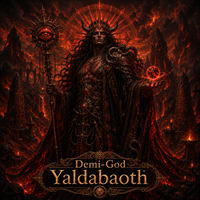
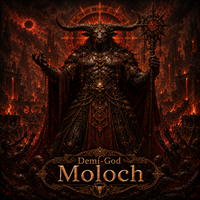
This disagreement becomes most dangerous in the matter of the two evil demi-gods: Yaldabaoth and Moloch.
Conflict Over Yaldabaoth and Moloch
Yaldabaoth and Moloch are not ordinary enemies. They are evil demi-gods whose followers bring corruption, domination, cruelty, spiritual enslavement, and sacrifice into the Earth Realm.
Yaldabaoth is associated with false light, deception, control, spiritual arrogance, and the imprisonment of the soul. His followers may claim wisdom, law, order, or divine authority, but beneath their words lies domination. They seek to bind the minds of mortals and cut them away from the living gods of the Earth Realm.
Moloch is darker still. He is the demi-god of devouring power, sacrifice, tyranny, blood tribute, and the hunger of empire. His worshippers believe that greatness is built on suffering, that the weak exist to be consumed, and that fear is the highest form of rule.
The Mother Goddess looks upon these demi-gods with sorrow and wrath. She wishes to protect the innocent, heal the wounded, and preserve life where possible. She may urge her followers to rescue the deceived, redeem those who can be redeemed, and avoid becoming monsters in the struggle against darkness.
Cernunnos respects her mercy, but he fears hesitation.
To him, Yaldabaoth is a parasite of the spirit, and Moloch is a devourer at the gates. He believes their cults must be hunted without delay. Their temples must be broken. Their priests must be exposed. Their armies must be crushed before they grow strong enough to corrupt kingdoms from within.
The Mother Goddess may say, “Save those who can still return to the light.”
Cernunnos may answer, “And strike down those who drag them into darkness.”
This tension does not break their love, but it does create conflict between their priesthoods and followers. Some Mother Goddess temples accuse Cernunnos worshippers of being too brutal. Some Cernunnos warbands accuse the Mother’s followers of being too slow to act against evil.
A wise ruler must understand both truths: mercy must not become weakness, and strength must not become savagery.
What Cernunnos Expects of His Followers
Cernunnos expects his followers to live with strength, discipline, courage, and respect for the wild. He does not demand endless conquest, but he does demand readiness. A ruler who follows Cernunnos must be able to defend their people, protect sacred forests, and confront enemies without fear.
His followers are expected to:
Protect forests, wild lands, beasts, rivers, and sacred hunting grounds.
Honour the cycle of life and death.
Train warriors and hunters to be strong, disciplined, and brave.
Avoid wasteful slaughter and cowardly cruelty.
Defend allied faiths, especially the followers of the Mother Goddess.
Stand firmly against the cults of Yaldabaoth and Moloch.
Respect animals taken in the hunt and never kill purely for vanity.
Reject softness, corruption, decadence, and spiritual weakness.
Value courage, endurance, loyalty, and instinct.
Punish oath-breakers and traitors.
Live close enough to nature that the soul does not become imprisoned by stone, gold, and pride.
Cernunnos does not forbid civilisation, but he distrusts kingdoms that become too distant from the earth. A castle should defend the land, not replace it. A king should serve the realm, not cage it.
Divine Blessings
When pleased, Cernunnos grants blessings of strength, movement, wilderness mastery, fertility, courage, and warlike endurance. His blessings are especially valuable to realms that rely on scouts, hunters, warriors, forest settlements, beast lore, and aggressive defence.
Possible blessings in the game world may include:
Stronger morale for armies fighting in forests, hills, or wild lands.
Improved scouting and tracking.
Better movement through forests and rough terrain.
Increased fertility and population growth among hardy rural clans.
Improved animal husbandry and hunting yields.
Stronger warrior training in settlements that honour him.
Bonuses against followers of Yaldabaoth and Moloch.
Improved resistance to fear, corruption, and dark cult influence.
Increased loyalty among warbands, hunters, and frontier peoples.
Enhanced defence of sacred groves and wild territories.
Cernunnos rewards rulers who build strong, living realms rooted in the land. His followers may not always be the richest or most polished kingdoms, but they can become among the hardest to conquer.
Divine Wrath
Cernunnos is not easily offended by hardship, bloodshed, or struggle. He understands war and death as parts of the world. But he despises cowardice, waste, corruption, and betrayal of the wild.
A ruler who claims to follow Cernunnos but burns forests for greed, overhunts sacred beasts, refuses to defend their people, submits to corrupt demi-gods, or grows decadent behind castle walls may lose his favour.
His punishments may include:
Poor hunting yields.
Loss of warrior morale.
Unrest among hunters, scouts, and frontier clans.
Reduced movement through forests and wild lands.
Animal attacks near settlements.
Sacred groves becoming hostile.
Weakening of fertility and vitality.
Loss of divine protection against dark cults.
Rebellion among warlike followers who see the ruler as unworthy.
In extreme cases, Cernunnos may send dreams of antlers, blood, and moonlit pursuit. The ruler may hear unseen hooves in the forest. Wolves may gather near roads. Stags may appear at the edge of battlefields as omens. If the warnings are ignored, his wrath may come through famine of the hunt, collapse of frontier loyalty, or the rise of wild warbands against the faithless ruler.
Temples, Groves, and Priesthood
Cernunnos is rarely worshipped in soft halls of marble. His holiest places are ancient forests, stone circles, hill shrines, caves, sacred springs, and groves where the old trees have never been cut.
His priests are often druids, hunters, beast-speakers, oath-keepers, and warrior mystics. Some wear antlered masks during rites. Others paint their skin with green and black markings before battle. His sacred ceremonies may involve the blessing of weapons, the honouring of hunted animals, fertility rites, moonlit vigils, and oaths sworn before fire and stone.
His priesthood has a complicated relationship with the temples of the Mother Goddess. In peaceful times, they cooperate closely. Her priestesses bless birth, healing, and harvest, while his druids bless hunt, strength, and defence. Together they maintain the balance of the living world.
But in times of war, especially against the cults of Yaldabaoth and Moloch, disagreements may arise. The priests of Cernunnos often call for faster, harsher action. They argue that darkness must be hunted before it spreads. The priestesses of the Mother Goddess may urge caution, mercy, and protection of innocents caught under the control of evil powers.
Both sides may be right.
Both sides may be wrong.
The player must decide how to rule.
Relationship with Other Gods
Cernunnos stands among the good gods, though he is one of the most primal and uncompromising of them. He respects gods of nature, courage, fertility, honour, and war when war is fought for a worthy cause.
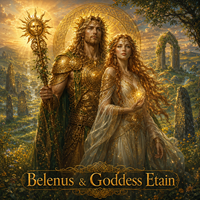
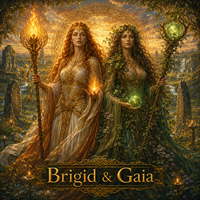
He is deeply bound to the Mother Goddess, even when they disagree. He may also respect gods such as Belenus if Belenus represents noble war, sunlight, protection, or righteous kingship. He may respect Brigid if her fire is used for craft, healing, poetry, and sacred inspiration rather than empty luxury. He may tolerate neutral gods when they preserve balance.
But he is an enemy of the evil demi-gods.
Yaldabaoth, to Cernunnos, is the false cage of the spirit.
Moloch is the devouring fire of tyranny.
Neither can be allowed to rule the Earth Realm.
Cernunnos in the Game
In Lords of Hy Brasil, choosing to follow Cernunnos should feel like choosing the path of the wild king: strong, ancient, dangerous, and deeply connected to the living earth. His religion is ideal for players who want a realm of fierce warriors, scouts, hunters, sacred groves, beast lore, and strong defensive or counter-attacking power.
Cernunnos is not a god for passive rulers. His followers expect courage. They respect strength. They believe a realm should be able to feed itself, defend itself, and strike hard against corruption.
A Cernunnos-aligned kingdom may gain powerful advantages in wilderness territories, warband morale, scouting, anti-cult warfare, and survival during harsh conditions. However, the player must avoid becoming a reckless butcher. Cernunnos honours necessary violence, not meaningless slaughter. He respects the hunt, not murder for pride.
His followers are encouraged to maintain good relations with the followers of the Mother Goddess, for the two faiths together form one of the strongest spiritual alliances in the Earth Realm. But when Yaldabaoth and Moloch rise, the player may face difficult religious choices.
Will they follow the Mother Goddess and seek mercy where possible?
Will they follow Cernunnos and hunt the darkness without delay?
Or will they find the wisdom to balance both?
Cernunnos does not ask his followers to be cruel.
He asks them to be strong enough that cruelty cannot rule the world.