Home |
Games |
About |
News |
Forum |
|
||||||||||||||||
The Realm of Hy Brasil |
||||||||||||||||
|
||||||||||||||||
The Goddess Gaia Theme
The Goddess Gaia
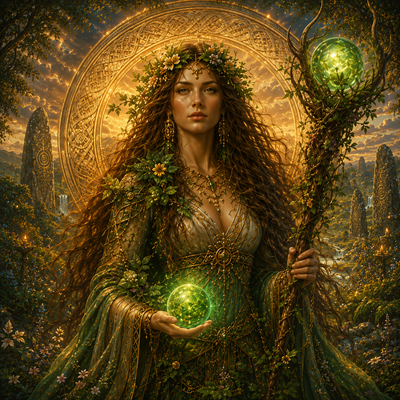
Goddess Gaia
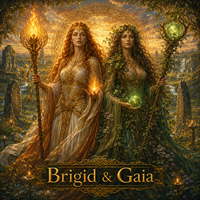
Gaia is the ancient goddess of the living earth, deep balance, stone, root, river, mountain, storm, season, growth, decay, and renewal. Among the gods of Hy Brasil, she is known as the Earth Mother, the Green Judge, the Lady of Root and Stone, the Keeper of the World’s Breath, and the Old Soul Beneath All Things.
Gaia is not counted among the good gods, nor does she serve the evil demi-gods. She is one of the great neutral powers of the Earth Realm, not because she lacks morality, but because her morality is older and wider than mortal kingdoms.
She does not think as kings think.
She does not judge as armies judge.
She does not love as mortals love.
Gaia sees the Earth Realm as a living body. Forests are its lungs. Rivers are its veins. Mountains are its bones. Soil is its flesh. Beasts, mortals, spirits, insects, seeds, and gods are all part of the vast web of existence.
To Gaia, balance is sacred.
A kingdom may be good, noble, and beloved, but if it grows too large and consumes the land without restraint, Gaia may oppose it. A war may be righteous, but if it poisons rivers and burns forests to ash, Gaia may withdraw her favour. A ruler may pray with beautiful words, but Gaia listens more closely to the sound of axes in old forests, the health of rivers, and the silence of fields where birds no longer sing.
She is patient beyond mortal understanding.
But when the balance of the world is threatened, her patience ends.
Celtic and Earth-Goddess Inspiration
Gaia is inspired by ancient earth-mother traditions, the sacred feminine of the land, and the old belief that the world itself is alive. Though her name comes from older earth-goddess traditions beyond the Celtic world, in Lords of Hy Brasil she has been woven into the divine race of the Earth Realm as a primal goddess of balance, nature, land, and world-soul.
Where the Mother Goddess is close to fertility, family, mercy, and the living land as a nurturing power, Gaia is broader and more ancient. She is not only the mother who feeds the village. She is the mountain that crushes empires, the storm that breaks fleets, the winter that tests the weak, and the spring that returns after death.
She is the deep earth before civilisation.
She is the world beneath every throne.
Divine Role in the Earth Realm
The Earth Realm is ruled by a race of gods who expect their followers to behave according to the religion they claim to serve. Gaia’s religion is one of balance, restraint, respect for the living world, and acceptance of natural cycles.
Her followers are expected to understand that every action has consequence. Cutting forests may bring timber, but also erosion, flooding, loss of wildlife, and anger from spirits of the land. Expanding cities may bring wealth, but also hunger for stone, wood, water, and labour. Raising armies may defend a people, but armies must be fed, and the land pays the price.
Gaia does not forbid civilisation.
She forbids blindness.
She teaches that mortals may build castles, roads, farms, temples, and kingdoms, but they must do so with respect for the balance of the Earth Realm. A ruler who takes from the land must give back. A ruler who clears a forest must plant, protect, or sanctify another. A ruler who mines the mountain must honour the spirits of stone. A ruler who takes life in war must restore life in peace.
To follow Gaia is to rule with the long view.
Gaia and Brigid: Two Neutral Powers
Gaia and Brigid are both neutral gods who strive for balance, but they represent different kinds of balance.
Gaia is the balance of the natural world. She is earth, forest, river, mountain, seed, beast, weather, birth, death, and renewal. She is concerned with whether kingdoms live in harmony with the world that sustains them.
Brigid is the balance of sacred civilisation. She is fire, healing, poetry, smithcraft, inspiration, knowledge, wisdom, and the responsible use of creation. She is concerned with whether mortals use their gifts wisely or corrupt them into tools of domination.
Gaia asks whether a realm is damaging the living world.
Brigid asks whether a realm is misusing the sacred fire of knowledge.
Gaia may oppose a peaceful kingdom that destroys too much land.
Brigid may oppose a clever kingdom that uses invention, law, or craft for tyranny.
Gaia is the old earth beneath all things.
Brigid is the sacred flame in the hands of mortals.
Together, they form the great neutral axis of Hy Brasil: nature’s balance and civilisation’s balance.
Gaia and the Mother Goddess
Gaia and the Mother Goddess are close in spirit, but they are not the same.
The Mother Goddess loves mortals more personally. She cares for birth, healing, family, fertility, harvest, mercy, and the protection of the people. Her followers often see the land as a sacred mother who nourishes and shelters them.
Gaia’s love is older, deeper, and less personal. She loves the whole living world, not only mortals. She loves the wolf as much as the shepherd, the forest as much as the village, the river as much as the city that drinks from it.
The Mother Goddess may plead for a famine-struck kingdom.
Gaia may ask why the kingdom exhausted the soil.
The Mother Goddess may shelter the weak.
Gaia may remind them that life must also become strong.
This can create gentle tension between their priesthoods. The Mother Goddess’ followers may sometimes see Gaia as too harsh. Gaia’s followers may sometimes see the Mother’s people as too focused on human suffering while forgetting the wider balance of the living world.
Yet both goddesses oppose reckless destruction, cruelty toward the innocent, and the poisoning of the land. In many realms, their temples stand near each other, with the Mother’s priestesses blessing birth and harvest, while Gaia’s druids guard the forests, rivers, and stone circles.
Gaia and Cernunnos
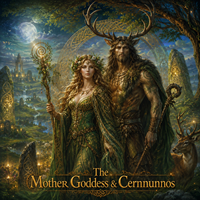
Gaia respects Cernunnos deeply. He is the horned god of the wild, beasts, instinct, strength, and survival. He understands much of what Gaia teaches, for his power moves through forest, hunt, blood, and wilderness.
Cernunnos protects the wild.
Gaia is the world that gives the wild its home.
However, they are not always in perfect agreement. Cernunnos can be fierce, territorial, and willing to answer threats with swift violence. Gaia is slower, deeper, and more cyclical. She may allow one forest to burn if the ashes feed a greater renewal. She may allow one people to fall if their fall restores balance to the land.
Cernunnos is the antlered king of the living wild.
Gaia is the ancient earth beneath his hooves.
His followers may be hunters, scouts, beast-speakers, and forest warriors. Her followers may be earth-priestesses, river-keepers, mountain druids, stone-seers, and guardians of sacred landscapes.
Together, they are powerful defenders of the natural order. But Gaia’s balance is wider than the hunt, and Cernunnos’ passion is sharper than Gaia’s patience.
Gaia and Belenus
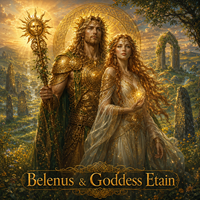
Gaia respects Belenus when his light heals, protects, and reveals truth. She honours the sun as one of the great life-giving forces of the Earth Realm. Without light, there is no harvest, no warmth, no blooming field, and no life on the surface of the world.
But Gaia is cautious of solar pride.
Belenus is noble, radiant, and righteous, but his followers can become convinced that their light must always advance, always cleanse, always conquer darkness wherever they see it. Gaia reminds them that not all darkness is evil. Seeds grow in darkness. Roots feed in darkness. Winter has purpose. Night has purpose. Death itself has purpose.
Belenus may say, “Let the light expose all shadows.”
Gaia may answer, “Some shadows shelter life.”
This does not make them enemies. In fact, Gaia often supports Belenus against Moloch, whose furnace-fire destroys rather than renews. But she teaches that even righteous light must respect the balance of day and night.
Gaia and Etain
Gaia looks kindly upon Etain, goddess of beauty, love, renewal, inspiration, and the golden soul. Etain understands that the world is not only useful — it is beautiful. Meadows, rivers, flowers, birdsong, lovers, songs, and sacred gardens all honour the living earth when they are created with respect.
Etain brings beauty to civilisation.
Gaia reminds civilisation that beauty begins in the natural world.
Their followers may work together to create sacred gardens, flowering temples, river sanctuaries, and peaceful places where art and nature are joined. Etain’s bards may sing of Gaia’s mountains. Gaia’s priestesses may bless Etain’s gardens.
Yet Gaia may judge Etain’s courts if they become too ornamental and forget the soil beneath their marble floors. Beauty that destroys nature is not sacred beauty. A palace garden fed by the hunger of poor farmers may not please Gaia, no matter how lovely its flowers.
Gaia and Yaldabaoth
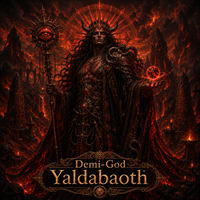
Gaia opposes Yaldabaoth’s hunger for world dominance, but her opposition is different from that of the good gods.
The Mother Goddess hates him because he chains life.
Cernunnos hates him because he cages the wild.
Belenus hates him because he is false light.
Etain hates him because he destroys free beauty.
Gaia opposes him because he is imbalance.
Yaldabaoth wants one throne, one law, one empire, one doctrine, and one will imposed upon the entire Earth Realm. To Gaia, this is an abomination. The world lives through diversity: forest and field, mountain and marsh, wolf and deer, village and wilderness, storm and calm, birth and death.
Yaldabaoth seeks to flatten the world into a machine.
He measures rivers, chains forests, numbers people, replaces sacred groves with courts, and turns living landscapes into provinces of empire. His order is not balance. It is domination disguised as structure.
Gaia may tolerate law. She may even support strong rule when it prevents chaos from destroying the land. But Yaldabaoth’s dream of total control is an attack on the soul of the Earth Realm itself.
If his empire grows too powerful, Gaia may stir against him. Roads may crack. Mines may collapse. Crops may fail in overworked provinces. Forests may swallow imperial outposts. Earthquakes may break his monuments. Rivers may change course, ignoring the lines drawn on his maps.
Yaldabaoth believes the world can be ruled.
Gaia remembers that the world can also refuse.
Gaia and Moloch
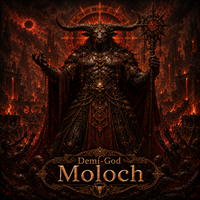
Gaia regards Moloch as a wound in the Earth Realm.
Moloch is fire without renewal, sacrifice without sacred purpose, hatred without wisdom, and destruction without balance. Natural fire has a place in Gaia’s world. It clears old growth, returns ash to soil, and makes way for new life. But Moloch’s fire is not natural fire. It is furnace-fire, hatred-fire, conquest-fire, the fire that burns because it enjoys suffering.
Gaia hates what Moloch does to the land. Burned groves, poisoned wells, slave mines, ash-fields, ruined villages, and mountains torn open for war all cry out to her.
Yet Gaia also fears him in a particular way. Not as a mortal fears death, but as the earth fears corruption. Moloch does not merely kill living things. He teaches mortals to enjoy killing. He teaches them to see the world as fuel. If his cults spread too far, they can turn entire regions into dead lands where nothing grows without pain.
Against Moloch, Gaia may cooperate with the good gods more openly. Even her most neutral priesthoods understand that Moloch is not a force of necessary death. He is excess, hatred, and ruin.
The wolf kills to eat.
Winter kills to turn the cycle.
Moloch kills because he hates life.
That is why Gaia rejects him.
What Gaia Expects of Her Followers
Gaia expects restraint, balance, wisdom, patience, reverence for nature, and respect for the long cycles of the Earth Realm. Her religion is not sentimental. It does not demand that mortals never cut a tree, never hunt, never mine, never build, or never wage war. It demands that they understand the cost of what they do.
Her followers are expected to:
Protect forests, rivers, mountains, marshes, meadows, and sacred landscapes.
Avoid reckless overbuilding, overmining, and overharvesting.
Restore damaged lands after war.
Respect animals, spirits of place, and ancient stone circles.
Build settlements in harmony with the land.
Punish those who poison rivers or destroy sacred groves.
Maintain balance between farming, hunting, building, and wilderness.
Avoid unnecessary wars that scar the land.
Oppose empires that seek total domination over the Earth Realm.
Oppose Moloch’s destructive furnace cults.
Treat the earth as a living power, not a dead resource.
Accept that decay, death, winter, and hardship are part of the sacred cycle.
A Gaia-aligned ruler must think carefully. Expansion is not forbidden, but careless expansion is dangerous. Wealth is not forbidden, but greed that wounds the land is sinful. War is not forbidden, but war without restoration may anger her.
Temples and Priesthood
Gaia’s temples are rarely enclosed buildings. Her holiest places are stone circles, ancient groves, river sources, mountain caves, deep valleys, old oaks, sacred springs, and places where the land’s power rises naturally.
Her priesthood includes earth-druids, stone-seers, river-keepers, green priestesses, mountain hermits, weather speakers, herbalists, and guardians of old places. They do not always live in cities. Many dwell at the edge of civilisation, watching how kingdoms treat the land.
Gaia’s rituals are seasonal and grounded in the living world. Her followers bless seeds, bury offerings in soil, cleanse rivers, plant sacred trees, mark solstices and equinoxes, and hold ceremonies for both birth and death.
They understand that death is not always evil.
A fallen leaf feeds the soil.
A dead beast feeds the wolf.
A burned field may one day bloom again.
But death without renewal is corruption.
That is why Gaia’s priesthood watches Moloch so closely.
Symbols of Gaia
Common symbols of Gaia include:
The Green Orb.
The Living Stone.
The Rooted Crown.
The Spiral of Seasons.
The World Tree.
The River Vein.
The Mountain Womb.
The Seed Beneath Snow.
The Circle of Root and Star.
These symbols appear on shrines, staffs, sacred stones, druidic robes, carved trees, and temple gardens. Her followers often wear green, brown, gold, and stone-grey. Many carry small stones, seeds, carved roots, or river shells as tokens of devotion.
Divine Blessings
When pleased, Gaia grants blessings of land health, growth, stability, natural defence, resilience, and environmental harmony. Her blessings make a realm strong from the ground upward.
Possible blessings in the game world may include:
Improved harvests when land is well-managed.
Faster recovery of damaged lands after war.
Reduced famine risk.
Stronger settlement stability in rural regions.
Improved herbal medicine and natural healing.
Better resistance to blight, poison, and cursed land.
Improved defensive bonuses in forests, hills, mountains, and sacred terrain.
Reduced unrest among nature-aligned populations.
Improved relations with Cernunnos and the Mother Goddess.
Protection against Moloch’s scorched-earth effects.
Resistance to Yaldabaoth’s overdevelopment and imperial exploitation.
Occasional natural omens warning of imbalance.
Gaia’s blessings are especially valuable for players who want long-term stability, sustainable growth, and strong defensive lands. She may not reward reckless conquest, but she can make a realm very difficult to destroy if it is rooted deeply in the land.
Divine Wrath
Gaia’s wrath is slow, but terrible. She rarely punishes instantly. Instead, imbalance builds until the land itself begins to answer.
A ruler may anger Gaia by poisoning rivers, overmining mountains, burning forests, ignoring famine, expanding too aggressively, failing to restore war-torn lands, or allowing Moloch’s cults to turn regions into ash.
Her punishments may include:
Declining harvests.
Increased famine risk.
Floods, droughts, storms, or harsh winters.
Mines collapsing.
Roads and buildings damaged by earth tremors.
Forests becoming hostile to armies.
Loss of natural healing bonuses.
Increased unrest among druids and rural populations.
Animal attacks near settlements.
Blight spreading across abused farmland.
Sacred sites falling silent.
In extreme cases, Gaia may turn the land against the ruler. Crops may fail across provinces. Rivers may flood roads. Mountains may swallow mines. Forests may hide rebels and beasts. The ruler may still command armies, but the earth beneath those armies will no longer welcome them.
Gaia does not need to shout.
The world itself speaks for her.
Gaia in the Game
In Lords of Hy Brasil, Gaia represents the path of natural balance, sustainable rule, land protection, and long-term resilience. Her religion is ideal for players who want a stable, defensive, nature-rooted kingdom that grows carefully and survives disasters.
A Gaia-aligned realm should feel different from one following the Mother Goddess. The Mother Goddess focuses more on people, fertility, mercy, healing, family, and the protection of mortal life. Gaia focuses on the whole ecosystem of the realm: land, rivers, forests, animals, soil, weather, and natural cycles.
Gaia is also different from Brigid. Brigid is the neutral goddess of sacred fire, craft, wisdom, poetry, healing, and inspired civilisation. Gaia is older and more elemental. Brigid teaches mortals how to use fire wisely. Gaia reminds them that even wise fire must not consume the world.
Players following Gaia may gain strong bonuses from preserving forests, maintaining sacred sites, avoiding ecological damage, and restoring lands after war. However, they may face penalties for reckless expansion, scorched-earth tactics, overbuilding, and alliance with destructive faiths.
Gaia does not demand that the player be peaceful.
She demands that the player be balanced.
A Gaia ruler may fight a war, but they should heal the land afterward.
They may build cities, but they should not choke the rivers.
They may mine mountains, but they should not hollow the world for greed.
They may expand, but not as Yaldabaoth expands.
They may use fire, but not as Moloch uses fire.
Final Lore Summary
Gaia is the neutral goddess of the living earth, deep balance, stone, root, river, mountain, season, growth, decay, and renewal. She is one of the great balancing powers of the Earth Realm, standing between the ambitions of gods, demi-gods, kings, and empires.
She honours the Mother Goddess but sees beyond mortal life alone.
She respects Cernunnos as a guardian of the wild.
She respects Belenus when his light heals and protects, but warns against prideful cleansing.
She welcomes Etain’s beauty when it grows from true harmony.
She opposes Yaldabaoth because total domination is imbalance.
She rejects Moloch because his fire destroys without renewal.
She stands beside Brigid as one of the two great neutral goddesses of balance: Gaia, the balance of nature; Brigid, the balance of sacred civilisation.
To follow Gaia is to remember that every throne rests upon soil, every army marches across land, every castle is built from stone, and every kingdom survives only because the Earth Realm allows it to.
Her teaching is simple:
Take, but give back.
Build, but do not devour.
Fight, but restore.
Rule, but remember the earth beneath your crown.