Home |
Games |
About |
News |
Forum |
|
||||||||||||||||
The Realm of Hy Brasil |
||||||||||||||||
|
||||||||||||||||
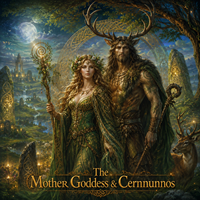
The Goddess Etain Theme
The Goddess Etain
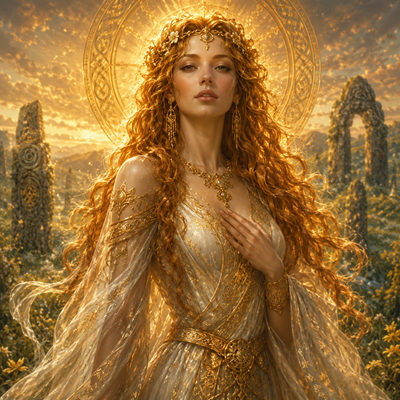
Goddess Etain
Etain is the radiant goddess of beauty, love, renewal, inspiration, sovereignty, grace, and the golden soul. Among the gods of Hy Brasil, she is known as the Lady of the Dawn, the Golden Bride, the Swan of the Otherworld, the Flower of Renewal, the Muse of Kings, and the Keeper of the Shining Heart.
She is not beauty in the shallow sense of decoration or vanity. Etain is beauty as a sacred force. She is the beauty of a peaceful kingdom, the beauty of a just ruler, the beauty of music sung at dawn, the beauty of lovers reunited, the beauty of a wounded land healing after war, and the beauty of the soul remembering its divine origin.
To her followers, a world without beauty becomes a world without hope.
Etain teaches that civilisation is not measured only by castles, armies, gold, or conquest. A realm is truly great when its people can sing, love, build, feast, create, marry, raise children, honour the dead, and look upon their own land with pride.
Where Etain is honoured, halls are filled with music, gardens are planted beside temples, bards are welcomed at court, marriages are blessed, artists are protected, and rulers are reminded that power without grace becomes tyranny.
Celtic Inspiration
In Celtic tradition, Etain is remembered as a figure of great beauty, transformation, love, and otherworldly mystery. Her stories are tied to enchantment, rebirth, longing, sovereignty, and the crossing between mortal and divine worlds. In Lords of Hy Brasil, this inspiration becomes the foundation for one of the great good goddesses of the Earth Realm.
The Etain of Hy Brasil is a divine being of luminous charm and spiritual strength. She is not passive. She does not merely stand beside stronger gods. Her power is subtler, but it is profound. She influences hearts, courts, marriages, alliances, poetry, dreams, and the destiny of kingdoms.
War may win a crown.
Law may hold a throne.
But Etain decides whether that throne is loved.
Divine Role in the Earth Realm
The Earth Realm is ruled by a race of gods who expect their followers to behave according to the religion they claim to serve. Etain’s religion demands grace, honour, beauty, loyalty, generosity, and respect for the sacred bonds that hold society together.
She expects her followers to protect love, marriage, art, poetry, music, hospitality, diplomacy, sacred oaths, and the dignity of the people. She favours rulers who create beautiful and stable realms rather than brutal empires. She blesses those who understand that morale, culture, and loyalty are as important as swords and walls.
To Etain, a kingdom is not just a machine for producing armies.
It is a living song.
If that song becomes cruel, ugly, false, and loveless, then the kingdom is already dying, even if its armies still march.
Lover of Belenus
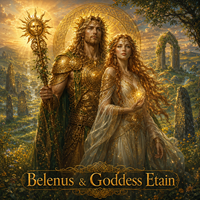
Etain is the divine lover of Belenus, the radiant god of the sun, noble war, healing light, protection, justice, and sacred kingship. Together they form one of the great divine pairings of the Earth Realm.
Belenus is the golden sun at its height: commanding, protective, honourable, and fierce against darkness.
Etain is the golden dawn: beautiful, renewing, inspiring, and filled with grace.
Their love is both romantic and cosmic. Belenus protects the light. Etain gives that light meaning. Belenus raises the spear against evil. Etain reminds him what the spear is raised to defend.
Together they represent noble civilisation at its best: courage joined with compassion, justice joined with beauty, kingship joined with love, and war restrained by purpose.
Their followers are usually natural allies. A kingdom that honours both Belenus and Etain may become a realm of golden temples, sacred fires, bardic halls, fair courts, shining banners, blessed marriages, and noble warriors who fight not for greed, but for the protection of all that is beautiful and good.
Yet they may sometimes differ in counsel. Belenus may call for swift action against evil, while Etain may urge diplomacy, patience, and the rescue of those who can still be saved. Belenus sees the battlefield. Etain sees the wound beneath the battle.
A wise ruler listens to both.
Etain and the Mother Goddess
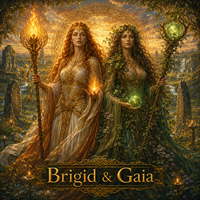
Etain honours the Mother Goddess as the ancient heart of life, fertility, birth, healing, and the sacred land. The two goddesses are close in spirit, though their powers are not identical.
The Mother Goddess is the deep earth, the womb, the field, the river, the hearth, and the life of the people.
Etain is the flowering of that life into beauty, love, art, grace, and noble culture.
Where the Mother Goddess blesses birth, Etain blesses the love that binds families together.
Where the Mother Goddess blesses harvest, Etain blesses the feast, the song, and the joy that follows.
Where the Mother Goddess heals the body, Etain heals the heart.
Their priestesses often work together. In many settlements, temples to Etain stand near sacred groves, wells, or gardens of the Mother Goddess. The Mother’s priestesses may bless the newborn child, while Etain’s priestesses bless the child’s naming feast, songs, future marriage, and place within the community.
Together, they make a kingdom feel alive.
Etain and Cernunnos
Etain has a more complex relationship with Cernunnos. She respects him as the ancient horned god of the wild, beasts, instinct, fertility, and primal strength. She understands that beauty is not only found in courts, music, and golden halls. It is also found in forests, stags, rivers, storms, and moonlit paths.
Cernunnos represents wild beauty.
Etain represents refined beauty.
Cernunnos teaches that life must be strong enough to survive.
Etain teaches that life must be meaningful enough to be worth surviving for.
They do not always agree. Cernunnos may find Etain’s priesthood too delicate, too concerned with courtly grace and diplomacy. Etain may find Cernunnos’ followers too harsh, too ready to accept suffering as natural. Yet both understand that a world without beauty is a world already half-conquered by darkness.
In times of peace, followers of Etain may bring music and ceremony to Cernunnos’ seasonal rites. In times of war, followers of Cernunnos may protect Etain’s temples from raiders, cultists, and tyrants.
Etain and Yaldabaoth
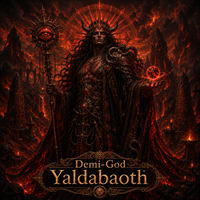
Etain despises Yaldabaoth, the conquering demi-god of false light, empire, chains, hierarchy, and spiritual control. Yaldabaoth sees beauty only as propaganda, love only as weakness, and art only as a tool for obedience.
In lands corrupted by Yaldabaoth, songs become hymns to the state. Marriage becomes a legal instrument. Art becomes imperial decoration. Bards become mouthpieces for power. Temples become courts. Beauty is no longer allowed to be free.
This is an insult to Etain’s very nature.
To Etain, true beauty cannot exist where the soul is chained. A golden palace built by slaves is ugly. A perfect law that crushes compassion is ugly. A shining empire that forbids love, poetry, and freedom is ugly.
Yaldabaoth’s false light may appear grand, but Etain sees the coldness beneath it. She teaches her followers to resist his influence through song, love, memory, secret poetry, hidden ceremonies, and loyalty to the living heart of the people.
In some conquered lands, Etain’s worship survives as whispered love songs, forbidden dances, embroidered symbols, and stories told quietly by grandmothers to children.
Yaldabaoth can outlaw a song.
He cannot easily kill the longing that gave birth to it.
Etain and Moloch
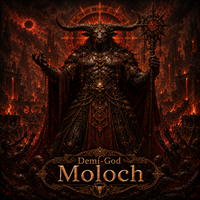
Etain hates and fears Moloch, the furnace demi-god of hatred, sacrifice, terror, and revenge. Moloch represents the deliberate destruction of beauty. He burns gardens, breaks statues, murders bards, enslaves lovers, defiles temples, and turns celebration into mourning.
Where Etain brings renewal, Moloch brings ash.
Where Etain blesses love, Moloch demands fear.
Where Etain inspires song, Moloch answers with drums of war and screams from the furnace.
Moloch’s hatred of Etain is savage because her very existence mocks him. He can destroy a hall, but not the memory of the song once sung there. He can burn a garden, but spring may return. He can kill lovers, but love may become legend and inspire rebellion for generations.
This is why Moloch’s cults often target Etain’s bards, dancers, priestesses, and artists. They understand that culture can keep hope alive even when armies have been defeated. A people who still sing are not fully conquered.
Etain fears Moloch because he is willing to burn everything that makes life beautiful. But she also defies him, because beauty returning from ruin is one of the deepest forms of victory.
What Etain Expects of Her Followers
Etain expects her followers to live with grace, honour, love, loyalty, creativity, and respect for beauty in all its forms. Her religion is not merely about romance or art. It is about preserving the soul of civilisation.
Her followers are expected to:
Protect love, marriage, family bonds, and sacred oaths.
Honour bards, poets, musicians, artists, dancers, and storytellers.
Build beautiful halls, gardens, shrines, and temples.
Treat guests with hospitality and dignity.
Respect women, lovers, spouses, and those bound by sacred vows.
Promote diplomacy where honourable peace is possible.
Protect culture from tyranny, corruption, and despair.
Honour Belenus and respect his followers.
Defend the innocent without losing compassion.
Oppose Yaldabaoth’s spiritual enslavement.
Oppose Moloch’s hatred, terror, and destruction.
Avoid cruelty, ugliness of spirit, betrayal, and needless humiliation of enemies.
Etain does not demand weakness. She understands that beauty must sometimes be defended with sword, shield, and sacrifice. But she teaches that victory without grace can become another kind of defeat.
Temples and Priesthood
Etain’s temples are among the most beautiful in the Earth Realm. They are built in golden meadows, beside rivers, near flowering groves, on dawn-facing hills, and in peaceful courts where sunlight falls through carved stone arches.
Her temples often contain gardens, fountains, music halls, painted walls, golden lamps, and chambers for poetry, marriage blessings, healing of grief, and sacred dream rituals. Unlike the severe temples of warlike gods, Etain’s holy places are designed to remind mortals that divine beauty can dwell in the world.
Her priestesses and priests may serve as marriage-blessers, singers, diplomats, dream-readers, healers of sorrow, guardians of sacred stories, and advisers on matters of courtly honour. They are often close to bards and artists, and some of the greatest songs in Hy Brasil are said to have been composed under Etain’s blessing.
To insult a bard in one of her temples is considered a serious offence.
To betray a sacred marriage oath sworn before Etain may bring terrible misfortune.
To destroy one of her gardens is to declare war upon beauty itself.
Symbols of Etain
Common symbols of Etain include:
The Golden Swan.
The Dawn Flower.
The Shining Veil.
The Lover’s Knot.
The Harp of Renewal.
The White-Gold Rose.
The Butterfly of Rebirth.
The Mirror of the Soul.
The Crown of Grace.
These symbols appear in temples, marriage rings, banners, bardic instruments, courtly robes, and sacred embroidery. A ruler who wears Etain’s symbol is expected to behave with dignity, generosity, and honour.
Divine Blessings
When pleased, Etain grants blessings of loyalty, diplomacy, culture, morale, renewal, beauty, and emotional healing. Her blessings strengthen the spirit of a realm and can make a kingdom beloved by its people.
Possible blessings in the game world may include:
Improved loyalty among citizens and nobles.
Better diplomacy with good or neutral factions.
Increased success in alliance negotiations and marriage pacts.
Higher morale in settlements with temples, gardens, or bardic halls.
Reduced unrest after war or disaster.
Faster recovery from grief, famine, plague, or occupation.
Improved cultural influence over nearby realms.
Greater bardic prestige and court reputation.
Stronger relations with followers of Belenus.
Resistance against Yaldabaoth’s cultural control.
Resistance against Moloch’s terror and despair.
Improved happiness in well-governed settlements.
Etain’s blessings may not look as immediately powerful as a war god’s attack bonus, but they can be extremely valuable over time. A realm loved by its people is harder to break. A court filled with music, honour, and hope is harder for evil cults to corrupt.
Divine Wrath
Etain’s wrath is not usually loud at first. She does not often strike with fire or storm. Instead, her favour fades from a realm, and life becomes colder, uglier, and more sorrowful.
A ruler may anger Etain by betraying oaths, abusing spouses, destroying art, humiliating captives, murdering bards, breaking sacred marriages, mocking love, ruling through cruelty, or allowing their kingdom to become spiritually ugly.
Her punishments may include:
Loss of public happiness.
Decline in court prestige.
Reduced success in diplomacy.
Increased betrayal among nobles and spouses.
Bards spreading negative songs about the ruler.
Lower morale after defeats.
Greater unrest in cities and castles.
Reduced loyalty from followers of Belenus and the Mother Goddess.
Temples refusing to bless marriages or alliances.
Cultural decline and loss of influence.
In extreme cases, Etain may curse a ruler’s court with lovelessness. Marriages may fail. Alliances may collapse. Songs may turn bitter. The people may still obey, but they will no longer love.
And a ruler who is not loved must rule by fear.
That is the first step toward darkness.
Etain in the Game
In Lords of Hy Brasil, Etain represents the path of beauty, loyalty, diplomacy, renewal, and cultural strength. Her religion is ideal for players who want to build a loved and respected realm, maintain alliances, strengthen morale, and resist the despair spread by evil demi-gods.
A player who follows Etain should think beyond armies and conquest. Her path rewards good governance, diplomacy, marriage alliances, cultural buildings, temples, gardens, bardic halls, and honourable behaviour.
Etain-aligned kingdoms may be especially good at keeping their people loyal, recovering after difficult wars, forming alliances with other good factions, and resisting the psychological warfare of Moloch or the cultural enslavement of Yaldabaoth.
However, her path may require restraint. Players who behave cruelly, betray allies, destroy beauty, or wage ugly wars of humiliation may lose her favour. Etain does not forbid war, but she expects war to serve life, honour, and protection — not vanity or cruelty.
Her followers are natural allies of Belenus, and their combined faiths can create one of the most noble and inspiring realms in the Earth Realm: radiant, brave, graceful, and hard to corrupt.
Final Lore Summary
Etain is the goddess of beauty, love, renewal, inspiration, sovereignty, and the golden soul. She is the lover of Belenus and one of the great good goddesses of the Earth Realm.
She honours the Mother Goddess because life must flower into joy.
She respects Cernunnos because wild beauty is still beauty.
She opposes Yaldabaoth because false order chains the soul.
She defies Moloch because hatred seeks to burn everything beautiful.
To follow Etain is to believe that kingdoms are not built by war alone. They are built by songs, vows, gardens, loyalty, love, honour, and the memory of beauty preserved through darkness.
Her teaching is simple:
Let love give courage to the heart.
Let beauty give meaning to the realm.
And when the world falls into shadow, let the first song of dawn begin again.