Home |
Games |
About |
News |
Forum |
|
||||||||||||||||
The Realm of Hy Brasil |
||||||||||||||||
|
||||||||||||||||
The Goddess Brigid Theme
The Goddess Brigid
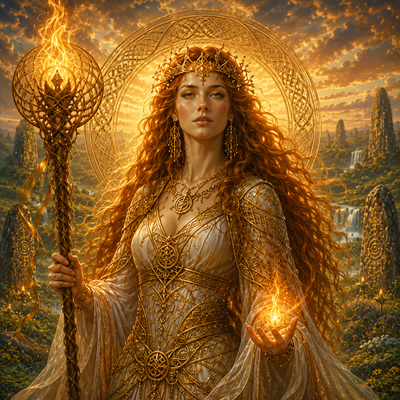
Goddess Brigid
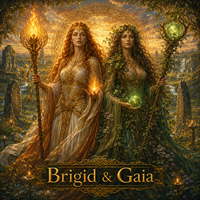
Brigid is the goddess of sacred fire, healing, poetry, inspiration, smithcraft, wisdom, prophecy, hearth, learning, and the responsible use of power. Among the gods of Hy Brasil, she is known as the Flame of Wisdom, the Lady of the Hearth, the Forge-Mother, the Bright Poetess, the Keeper of the Sacred Fire, and the Threefold Flame.
Brigid is one of the great neutral gods of the Earth Realm. She does not stand fully among the good gods, nor does she serve the evil demi-gods. Her purpose is balance — but not the deep natural balance of Gaia. Brigid’s balance is the balance of civilisation, knowledge, creativity, and sacred fire.
Fire can warm a home.
Fire can heal through the boiling of herbs.
Fire can forge a sword.
Fire can light a temple.
Fire can also burn a village.
Brigid teaches that power is not evil in itself. Knowledge is not evil. Craft is not evil. Weapons are not evil. Law is not evil. Fire is not evil.
But all these things become dangerous when wisdom is lost.
To Brigid, the great question is not simply, “Can this be done?”
The true question is, “Should this be done, and for what purpose?”
Celtic Inspiration
In Celtic tradition, Brigid is one of the most beloved and important goddesses, associated with fire, poetry, healing, smithcraft, fertility, wisdom, inspiration, and sacred protection. She is often linked with the hearth, the forge, the poet’s flame, and healing wells.
In Lords of Hy Brasil, Brigid becomes one of the great neutral powers of the Earth Realm. She is not neutral because she is indifferent. She is neutral because she understands that the same divine gifts can serve good or evil depending on the hands that hold them.
A sword may defend a village or murder an innocent.
A poem may inspire freedom or glorify tyranny.
A law may protect the weak or chain them.
A fire may warm the poor or feed the furnace of Moloch.
Brigid watches how mortals use the gifts of civilisation. She does not reject kingdoms, castles, learning, craft, weapons, or progress. She asks that they be guided by wisdom, restraint, and sacred responsibility.
Divine Role in the Earth Realm
The Earth Realm is ruled by a race of gods who expect their followers to behave according to the religion they claim to serve. Brigid’s religion is one of wisdom, craft, healing, inspiration, balance, and disciplined creativity.
She favours rulers who build wisely, educate their people, honour healers, support bards, protect craftspeople, maintain fair laws, and use weapons only with purpose. She blesses realms that understand civilisation should raise the soul, not crush it.
A Brigid-aligned kingdom should be a place of bright hearths, skilled smiths, respected healers, honest lawgivers, inspired poets, clever engineers, and rulers who think before they act.
But Brigid is no fool. She understands that civilisation can become corrupt. A beautiful city can hide starving poor. A clever court can become deceitful. A great forge can produce tools or chains. A poem can awaken courage or spread lies.
This is why she stands as a neutral judge between creation and corruption.
She does not ask mortals to abandon power.
She asks them to master it wisely.
Brigid and Gaia: The Two Neutral Goddesses
Brigid and Gaia are both neutral gods who strive for balance, but they represent different kinds of balance.
Gaia is the balance of nature: earth, river, mountain, root, forest, season, birth, death, and renewal.
Brigid is the balance of civilisation: fire, craft, medicine, poetry, law, learning, invention, and sacred skill.
Gaia asks: “Does this preserve the living world?”
Brigid asks: “Does this use knowledge and power wisely?”
Gaia may oppose a kingdom that destroys forests, poisons rivers, or overworks the land.
Brigid may oppose a kingdom that abuses law, corrupts learning, twists poetry into propaganda, or turns craft into oppression.
Gaia is the deep earth beneath the throne.
Brigid is the sacred flame within the hall.
Together, they form the neutral axis of Hy Brasil. Gaia reminds rulers that the world is alive. Brigid reminds them that civilisation must have a soul.
Brigid and the Mother Goddess
Brigid respects the Mother Goddess as a divine power of fertility, mercy, birth, healing, and the sacred protection of the people. Their followers often work well together, especially in matters of healing, childbirth, family welfare, and settlement stability.
The Mother Goddess protects life.
Brigid teaches life how to heal, learn, build, and create.
The Mother Goddess blesses the child.
Brigid blesses the hearth that warms the child, the healer who tends the child, the song that comforts the child, and the craft that builds the child’s home.
Brigid may sometimes find the Mother Goddess too emotionally driven, especially when mercy is extended to those who repeatedly abuse it. The Mother Goddess may sometimes find Brigid too analytical, too willing to weigh suffering against long-term wisdom. Yet both agree that life must be protected from cruelty, hunger, and despair.
A realm that honours both may become compassionate, educated, stable, and wise.
Brigid and Cernunnos
Brigid and Cernunnos have a more complicated relationship. Cernunnos represents the wild, beasts, instinct, survival, and untamed nature. Brigid represents the hearth, forge, skill, poetry, and disciplined use of fire.
Cernunnos may distrust too much civilisation. He knows that roads bring axes, forges bring weapons, and cities often forget the forest.
Brigid may distrust wildness without wisdom. She knows that instinct alone can become savagery, and strength without learning can waste itself in endless bloodshed.
Yet they are not enemies. The hunter needs the smith. The warrior needs the healer. The forest clan needs the bard who remembers its stories. The wild shrine needs the sacred flame.
Brigid teaches Cernunnos’ followers to use tools without becoming slaves to them.
Cernunnos teaches Brigid’s followers that not all wisdom comes from books, forges, or halls. Some wisdom runs on four legs beneath the moon.
Together, they can create a powerful balance between wilderness and craft.
Brigid and Belenus
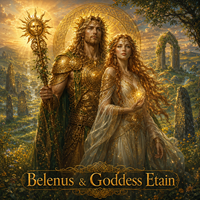
Brigid respects Belenus greatly. He is the radiant god of the sun, healing light, justice, noble war, and sacred kingship. His light and her flame are related powers, though they are not the same.
Belenus is the sun in the sky.
Brigid is the sacred fire kept by mortal hands.
Belenus reveals darkness.
Brigid teaches mortals what to do with the truth once it is revealed.
Belenus may lead armies against evil. Brigid may forge their weapons, heal their wounded, bless their banners, and record their deeds in poetry.
However, Brigid may also warn Belenus’ followers when righteous fire risks becoming zealotry. She knows that even good causes can become dangerous when people stop thinking. A holy war fought without wisdom can leave scars that last for generations.
Belenus burns with justice.
Brigid tempers justice in the forge of wisdom.
Brigid and Etain
Brigid and Etain are natural allies in matters of culture, poetry, beauty, inspiration, and the soul of civilisation.
Etain is beauty, love, grace, renewal, and the golden heart.
Brigid is inspiration, craft, poetry, healing, and the sacred flame of creation.
Etain inspires the song.
Brigid gives the bard the fire to compose it.
Etain blesses beauty.
Brigid teaches the artisan how to shape beauty into jewellery, halls, poems, music, and sacred objects.
Together, their followers can create some of the most cultured and inspiring realms in Hy Brasil. A kingdom that honours both may become famous for golden halls, bardic schools, healing houses, fine smithwork, poetry, diplomacy, and sacred festivals.
Yet Brigid may sometimes judge Etain’s followers if they become too concerned with beauty and not enough with wisdom. Etain may judge Brigid’s followers if they become too practical and forget joy, grace, and love.
Civilisation needs both.
The flame must be beautiful.
The beauty must have wisdom.
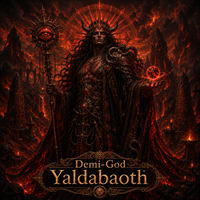
Brigid and Yaldabaoth
Brigid detests Yaldabaoth’s struggle for world dominance. Of all the gods, she may understand the danger of Yaldabaoth more clearly than most, because he corrupts the very things she protects.
Yaldabaoth does not hate civilisation. He twists it.
He takes law and makes it tyranny.
He takes writing and makes it surveillance.
He takes learning and makes it doctrine.
He takes architecture and makes prisons.
He takes order and makes empire.
He takes sacred fire and places it behind iron gates.
To Brigid, this is a terrible blasphemy. Yaldabaoth’s empire is not ignorance. It is knowledge without wisdom. It is craft without conscience. It is law without compassion. It is civilisation without soul.
This is why Brigid’s followers are often among the strongest intellectual and cultural enemies of Yaldabaoth. They may expose his false doctrines, hide forbidden books, protect independent scholars, smuggle bards out of conquered cities, and preserve old knowledge that his empire tries to destroy or control.
Yaldabaoth seeks one law, one throne, one doctrine, one approved truth.
Brigid answers with a thousand hearths, a thousand songs, and the stubborn flame of free wisdom.
She does not merely oppose his conquest.
She opposes the idea that knowledge belongs to tyrants.
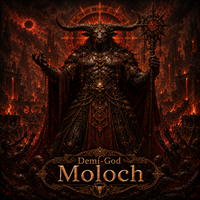
Brigid and Moloch
Brigid despises Moloch because he profanes fire itself.
To Gaia, Moloch is destruction without renewal.
To the Mother Goddess, he is hatred against life.
To Belenus, he is the corrupt fire of evil war.
To Brigid, he is the desecration of the sacred flame.
Brigid’s fire warms, heals, inspires, forges, purifies, and guides. Moloch’s fire devours, tortures, enslaves, and destroys. His furnace-altars are mockeries of her sacred hearths and forges.
Moloch takes the gift of fire and reduces it to cruelty.
He burns books, temples, homes, bodies, and fields. He turns the forge into a weapon factory, the hearth into ash, and sacrifice into terror. His followers use flame not to create, but to break the soul.
Brigid’s followers often see Moloch’s cults as an abomination that must be stopped. Even though she is neutral, she rarely remains passive when Moloch spreads too far. He is not balance. He is the abuse of power, the corruption of fire, and the murder of craft’s sacred purpose.
Where Moloch burns a village, Brigid’s healers may be the first to arrive.
Where Moloch destroys a library, Brigid’s scribes may preserve the surviving pages.
Where Moloch enslaves smiths to forge weapons of terror, Brigid’s priests may inspire revolt from within the furnace.
What Brigid Expects of Her Followers
Brigid expects her followers to use knowledge, fire, craft, and power responsibly. Her religion is demanding because she does not allow ignorance as an excuse when wisdom was available.
Her followers are expected to:
Keep sacred hearths and temple flames burning.
Honour healers, smiths, poets, bards, teachers, and wise counsellors.
Use craft and invention for the good of the realm.
Forge weapons responsibly and avoid needless war.
Heal the sick and wounded where possible.
Protect knowledge from tyrants and destroyers.
Maintain fair laws guided by wisdom and compassion.
Support poetry, learning, music, and storytelling.
Oppose Yaldabaoth’s control of knowledge and law.
Oppose Moloch’s corruption of fire and craft.
Respect Gaia’s natural balance when building and forging.
Respect Etain’s beauty and the Mother Goddess’ mercy.
Warn rulers when ambition outruns wisdom.
A Brigid-aligned ruler should not be anti-civilisation. Quite the opposite. Brigid blesses civilisation when it is wise, creative, and humane. But she punishes the misuse of civilisation’s gifts.
Temples and Priesthood
Brigid’s temples are often built around sacred flames, healing wells, smithing halls, libraries, bardic schools, and hearth sanctuaries. Some temples are quiet places of poetry and prophecy. Others ring with hammer on anvil. Others are filled with healers preparing herbs, poultices, and sacred waters.
Her temples often have three sacred chambers:
The Hearth Chamber, where families, travellers, and the poor may receive warmth and blessing.
The Forge Chamber, where smiths create tools, weapons, jewellery, and sacred objects under priestly guidance.
The Well or Healing Chamber, where the sick and wounded are treated, and where prophecy may come through water, flame, or song.
Her priesthood includes flame-keepers, healers, smith-priests, poetesses, bards, scribes, teachers, law-speakers, and prophetic dreamers. Some are gentle healers. Some are fierce defenders of knowledge. Some are master smiths whose blades are said to sing when drawn.
A temple of Brigid is not merely a place of worship.
It is a school, hospital, forge, library, and sanctuary.
Symbols of Brigid
Common symbols of Brigid include:
The Threefold Flame.
The Sacred Hearth.
The Hammer and Harp.
The Healing Well.
The Poet’s Spark.
The Golden Anvil.
The Flame-Crowned Staff.
The White Cow of Plenty.
The Shield of Wisdom.
The Candle in the Storm.
These symbols appear on temple doors, smithing tools, healer’s satchels, bardic instruments, manuscripts, shields, and holy jewellery. Her followers often wear white, gold, amber, red, and flame-orange.
Divine Blessings
When pleased, Brigid grants blessings of healing, craft, knowledge, morale, inspiration, and wise governance. Her gifts are useful for balanced players who want a strong, cultured, technologically capable, and resilient realm.
Possible blessings in the game world may include:
Improved healing in towns, castles, and temples.
Better smithing output from armouries and forges.
Improved weapon and armour quality.
Greater success for bards, teachers, and diplomats.
Reduced unrest through wise law and counsel.
Improved research, learning, or building efficiency.
Higher morale when defending homes and sacred hearths.
Protection against Moloch’s fire-based terror.
Resistance to Yaldabaoth’s propaganda and false doctrine.
Improved relations with Etain, Belenus, Gaia, and the Mother Goddess.
Better recovery after raids, sieges, or disasters.
Chance of prophetic warnings through flame, dreams, or poetry.
Brigid’s blessings are not purely military, but they can make a kingdom extremely strong. Better weapons, better healing, better morale, better knowledge, and wiser law can change the fate of a realm.
Divine Wrath
Brigid’s wrath falls upon those who misuse sacred gifts. A ruler may anger her by burning libraries, abusing healers, enslaving smiths, twisting poetry into propaganda, forging weapons for cruel wars, using law to protect corruption, or allowing knowledge to serve tyranny.
Her punishments may include:
Reduced healing effectiveness.
Poor-quality weapons or armour from forges.
Accidents in smithies and workshops.
Loss of bardic support.
Bad counsel spreading through court.
Increased corruption among scribes, judges, and officials.
Temple flames burning low.
Reduced morale among craftsmen and healers.
Public criticism from poets and teachers.
Increased vulnerability to Yaldabaoth’s doctrine.
Increased vulnerability to Moloch’s corrupted fire.
In extreme cases, Brigid may withdraw inspiration from a ruler’s realm. Songs become dull. Crafts fail. Healers lose confidence. Smiths make mistakes. Laws become clumsy. The whole kingdom may still function, but without spark, wisdom, or soul.
A realm without Brigid’s flame becomes cold even when its hearths are lit.
Brigid in the Game
In Lords of Hy Brasil, Brigid represents the path of sacred civilisation, wise power, healing, craft, knowledge, poetry, and responsible fire. Her religion is ideal for players who want a balanced realm with strong infrastructure, good healing, skilled armouries, cultural prestige, and resistance to corruption.
A Brigid-aligned kingdom may not be as fertile as a realm blessed by the Mother Goddess, as wild as a realm of Cernunnos, as radiant in holy war as a realm of Belenus, or as culturally enchanting as a realm of Etain. But it can become one of the most practical and well-rounded kingdoms in the game.
Brigid’s followers can support strong castles, skilled smiths, better-equipped armies, respected healers, loyal bards, and wise legal systems. She is especially useful for players who want to develop their realm carefully rather than simply conquer.
However, Brigid demands responsibility. A player who builds armouries only to wage cruel wars may lose her favour. A player who uses law to oppress rather than protect may anger her. A player who allows Yaldabaoth to control knowledge or Moloch to corrupt fire may face divine judgement.
Brigid does not oppose power.
She opposes power without wisdom.
Final Lore Summary
Brigid is the neutral goddess of sacred fire, healing, poetry, smithcraft, wisdom, prophecy, hearth, and inspired civilisation. She stands beside Gaia as one of the two great neutral balancing powers of the Earth Realm.
Gaia protects the balance of nature.
Brigid protects the balance of civilisation.
She honours the Mother Goddess for protecting life.
She respects Cernunnos for preserving wild wisdom.
She respects Belenus but warns against righteous zeal without thought.
She works closely with Etain in matters of beauty, poetry, and culture.
She detests Yaldabaoth because he turns law, learning, and civilisation into chains.
She despises Moloch because he corrupts fire into terror and sacrifice.
To follow Brigid is to keep the sacred flame alive — not as a weapon of domination, but as a light of healing, craft, wisdom, and inspiration.
Her teaching is simple:
Light the fire, but do not worship the flame.
Forge the sword, but remember why it is drawn.
Write the law, but keep mercy in the ink.
Seek knowledge, but never sell wisdom to tyranny.