

Home |
Games |
About |
News |
Forum |
Game Currently In Development
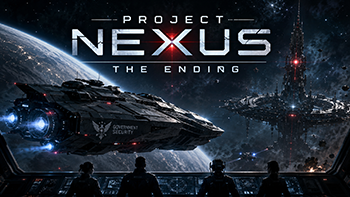
Project Nexus: The Ending Theme
Project Nexus: The Ending
A First-Person Dystopian Science-Fiction RPG
Project Nexus: The Ending is a story-driven first-person shooter RPG set in a future where Earth is no longer governed in the interests of its people.
After decades of political collapse, economic dependency and corporate expansion, the world’s most powerful companies have absorbed the institutions of government. Their executives now sit beside military commanders and state officials, while private corporate guilds control security, medicine, scientific research, transport and off-world development.
What remains of democracy has been replaced by a tightly controlled Corporate Dictatorship.
The Earth Government still exists in name, but its laws are shaped by corporate interests. Entire settlements, research programmes and planetary colonies are managed by private organisations with little public oversight. Security forces protect the system, dissidents are branded as terrorists, and classified experiments are hidden behind layers of bureaucracy.
You serve that system.
The Player’s Role
The player is an officer of the Earth Security Services Directorate, commonly known as the ESS.
The ESS is responsible for investigating crimes, protecting Government interests and responding to security incidents throughout Earth-controlled space. Its personnel operate under strict authority and are expected to obey orders without hesitation.
The player is assigned to a small ESS vessel as part of a five-person crew:
- the player, serving as the field security officer
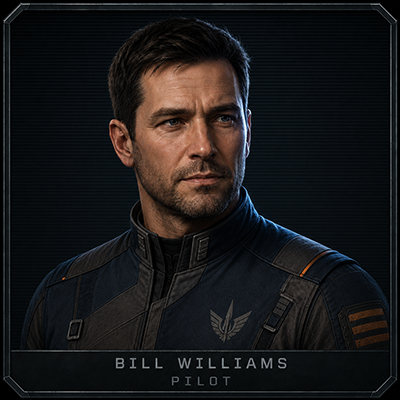
- Bill Williams, the ship’s pilot
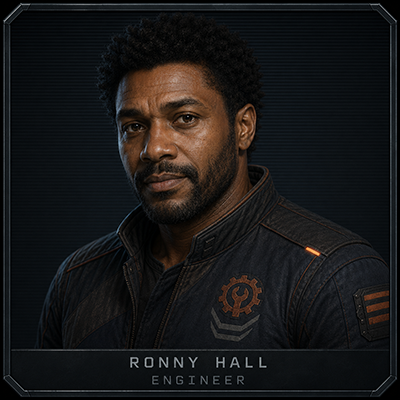
- Ronny Hall, the ship’s engineer
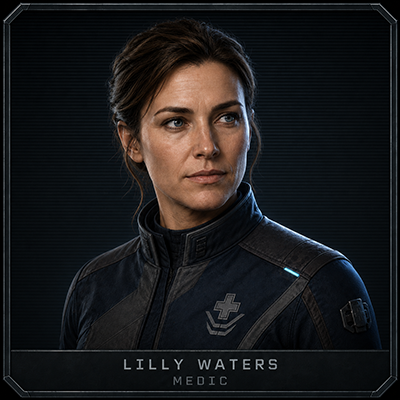
- Lilly Waters, the ship’s medic
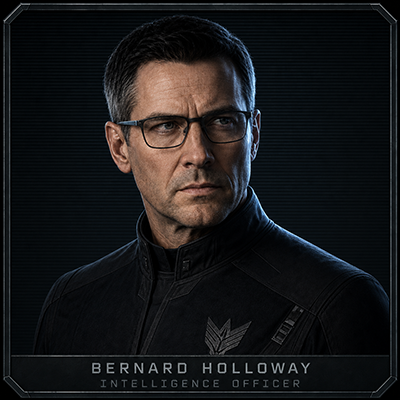
- Bernard Holloway, the crew’s intelligence officer
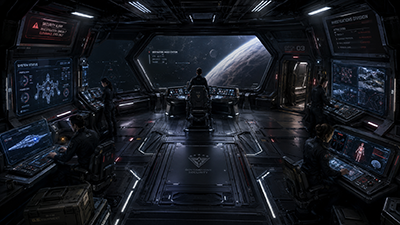
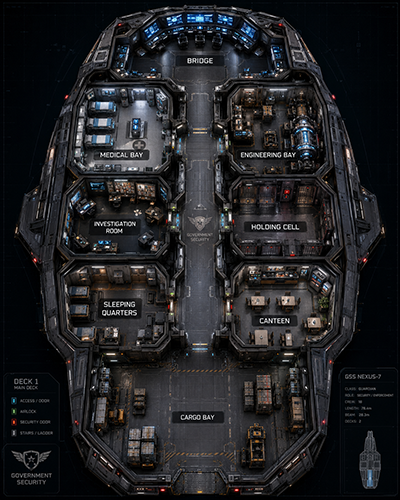
The ship acts as the central hub of the game. From its bridge, the crew receives orders, reviews evidence, communicates with Security Headquarters and selects destinations.
The game does not require the player to manually fly across a vast open universe. Instead, the bridge navigation system allows the crew to travel directly to settlements, research stations, ships and remote worlds connected to the investigation.
Each destination presents a focused mission with its own characters, dangers, evidence and moral choices.
Investigate, Question and Decide
The player is sent to investigate crimes and security incidents on behalf of the Earth Government.
At first, these assignments may appear straightforward:
- inspect an isolated research station
- investigate missing personnel
- recover stolen Government property
- locate escaped prisoners
- respond to distress signals
- question suspects
- secure classified information
- confront rebels, pirates or corporate forces
However, the official version of events is not always the truth.
Witnesses may be frightened or dishonest. Corporate officials may conceal evidence. Rebels may know more than the Government admits. Security personnel may have been ordered to destroy records rather than protect them.
The player must explore each location, interview those involved and decide which sources can be trusted.
Evidence may come from:
- security recordings
- computer terminals
- medical reports
- research logs
- intercepted communications
- witness testimony
- hidden laboratories
- damaged equipment
- classified files
- the bodies and remains of failed experiments
The choices made during these investigations affect more than the immediate mission. They gradually reveal a conspiracy connecting powerful corporations, the Earth Government and a secret research programme known as Project Nexus.
The Project Nexus Conspiracy
Project Nexus was presented internally as a programme intended to produce stronger and more effective soldiers.
Prisoners and other vulnerable test subjects were used in biological and neurological experiments designed to remove fear, hesitation and moral restraint. The corporations behind the project wanted obedient super-soldiers who could carry out orders without guilt or resistance.
The programme failed.
Many subjects died during testing. Others were transformed into violent and uncontrollable mutants. Rather than creating disciplined soldiers, the experiments produced beings driven by aggression, pain and instinct.
The corporations involved attempted to conceal the disaster.
Research records were classified. Survivors were imprisoned. Security teams were ordered to eliminate witnesses. Government departments denied knowledge of the programme while continuing to protect the organisations responsible.
As the player uncovers the truth, the mission becomes larger than a single investigation.
The crew must decide whether to expose Project Nexus, suppress the evidence, rescue the surviving prisoners or continue serving the Government that created them.
Dialogue and Crew Relationships
Dialogue is one of the most important systems in Project Nexus: The Ending.
Conversations are not simply a way to receive information. The player’s words can affect the emotional state, loyalty and behaviour of both NPCs and crew members.
A threatening response may intimidate a suspect but anger Lilly. Blind obedience may earn Bernard’s approval while causing Bill to lose trust in the player. Showing compassion toward a prisoner may strengthen support among some crew members while making others question the player’s commitment to the ESS.
Different characters judge the player according to their own values, fears and loyalties.
Bill Williams — Pilot
Bill begins the story as a loyal ESS pilot. He has served long enough to understand the importance of discipline, but he is not comfortable with unnecessary cruelty.
As the conspiracy is uncovered, Bill becomes increasingly disturbed by the actions of the corporations and Government. He may eventually sympathise with the rebels, particularly if the player shows independence and concern for innocent lives.
Ronny Hall — Engineer
Ronny is technically capable, practical and loyal to the security system.
His loyalty is driven partly by fear. He knows that refusing orders could cost him his career, freedom or life. He may recognise that the Government is acting wrongly while still believing resistance is too dangerous.
The player’s decisions can either help Ronny find courage or convince him that obedience is the only way to survive.
Lilly Waters — Medic
Lilly begins as a professional member of the crew who accepts the authority of the ESS.
Her medical duties bring her into direct contact with the victims of Project Nexus. As she witnesses the suffering caused by the experiments, her priorities begin to change.
Lilly may eventually support rescuing the prisoners and joining the rebellion. She responds strongly to compassion, honesty and the protection of civilians.
Bernard Holloway — Intelligence Officer
Bernard is the crew member most loyal to the Earth Government and the ESS.
He believes order is necessary for civilisation and regards rebellion as a threat that must be destroyed. He is suspicious of anyone who questions official orders and may argue that classified programmes are justified by national security.
As the crisis develops, Bernard may become the player’s strongest supporter or most dangerous internal opponent.
Implant Communication
All senior Earth Government and ESS personnel are fitted with mandatory neural implants.
These implants allow the player to remain in direct contact with the crew during missions.
Crew members aboard the ship can:
- speak directly into the player’s mind
- receive mission information instantly
- see a live visual feed through the player’s eyes
- analyse evidence remotely
- offer tactical advice
- react emotionally to events
- warn the player about danger
- argue over decisions while the player is still in the field
This allows the crew to remain involved even when the player is exploring a planet or station alone.
The implant system also creates tension. The player is rarely truly isolated, and the Government may be capable of monitoring far more than it admits.
Combat and Exploration
Although investigation and dialogue drive the story, Project Nexus is also a first-person action RPG.
The player will face enemies including:
- failed Project Nexus mutants
- corporate security personnel
- hostile ESS forces
- armed rebels
- raiders and pirates
- escaped prisoners
- automated security systems
- mercenaries employed by corporate guilds
Combat is intended to feel tactical rather than constant. The player may enter a location expecting to conduct an interview, only for the situation to collapse into violence.
Weapons can include Government-issued pistols and rifles, corporate firearms and equipment recovered from enemies. Exploration may also reveal ammunition, medical supplies, access cards and evidence needed to progress.
Not every hostile faction is automatically evil.
Rebels may attack the player because they believe the ESS is protecting the conspiracy. Corporate guards may only know part of the truth. Prisoners may be violent because of what was done to them.
The player must decide when to fight, when to negotiate and when to withdraw.
Missions and RPG Progression
Missions are structured around investigation, dialogue, exploration and combat.
A typical assignment may involve:
- receiving orders aboard the ship
- discussing the mission with the crew
- travelling to the destination
- meeting local officials or witnesses
- exploring the location
- recovering evidence
- confronting hostile forces
- deciding what information to report
- returning to the ship
- dealing with the crew’s reaction
Objectives may change as new evidence is discovered.
An order to recover Government property might become a decision about whether that property should be destroyed. A suspected rebel may turn out to be a whistleblower. A rescue mission may reveal that Security Headquarters never intended anyone to survive.
The player’s choices can influence:
- crew loyalty
- faction relationships
- available dialogue
- mission outcomes
- future allies and enemies
- which evidence is preserved
- whether the crew obeys later orders
- the final ending
The First Major Investigation
The opening investigation takes the crew to Helios-7, an isolated research outpost on a harsh desert world.
Security Headquarters claims that the facility has suffered a chemical containment accident. Several researchers are missing, communications have failed and the outpost administrator insists that the situation is under control.
The player is ordered to:
- contact Outpost Administrator Mara Venn
- inspect the settlement
- locate the missing personnel
- recover the facility’s security records
- investigate the communications failure
- identify references to Project Nexus
- report all findings to Security Headquarters
The mission initially appears to be a routine containment investigation.
It is not.
Beneath the research station lies a hidden programme, imprisoned test subjects and evidence of an experiment that powerful people are willing to kill to protect.
Helios-7 marks the beginning of the crew’s transformation from loyal Government personnel into individuals forced to decide what loyalty, justice and survival truly mean.
A Story Shaped by the Player
Project Nexus is built around difficult choices rather than a simple division between heroes and villains.
The player may choose to:
- remain loyal to the ESS
- expose the corporations
- protect the crew above all else
- support the rebels
- rescue Project Nexus prisoners
- destroy dangerous research
- preserve the programme for Government use
- conceal evidence
- betray allies
- attempt to reform the system from within
The crew will not always agree.
Some may support the player. Others may resist, refuse orders or become hostile. A decision that saves lives in one mission may make a later mission more dangerous.
By the end of the game, the player and crew must make a final choice.
They can obey the Government, defend the corporate order and eliminate those attempting to expose Project Nexus.
Or they can turn against the system they once served, free the surviving prisoners and join the rebellion.
The ending will be shaped by the evidence recovered, the alliances formed and the trust the player has earned—or lost—among the crew.
The Central Question
Project Nexus: The Ending is a game about loyalty, responsibility and the cost of obedience.
When the law exists to protect corruption, is following orders still honourable?
When rebellion threatens innocent lives, is resistance always justified?
When your friends no longer agree with your decisions, how far can command authority be pushed before the crew breaks apart?
The player begins the game as an officer of the Earth Security Services Directorate.
What they become by the end is their decision.
 |
 |
 |
 |
 |
 |
 |
 |